







What's Happening?
The University of Michigan is seeking millwrights to install, remove, and repair machinery and equipment according to layout plans, blueprints, and specifications. These skilled tradespeople utilize hoists, lifts, and various hand and power tools to perform
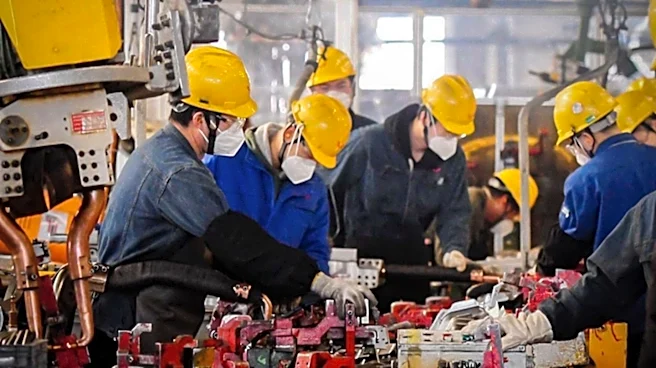
their duties. Their responsibilities include moving machinery and equipment, as well as adjusting, aligning, and assembling components using precision instruments like squares, rules, levels, and micrometers. The scope of work encompasses a wide array of mechanical units, such as refrigeration equipment, cooling towers, air handling and exhaust systems, presses, CNC machines, conveyors, and hydraulic lifts. Millwrights are also tasked with dismantling large mechanical units to access and replace defective parts, inspecting component conditions, and determining the cause of machinery breakdowns using diagnostic devices. They are expected to read blueprints, prepare sketches, and fabricate structures like ducts and machine guards.
Why It's Important?
The role of millwrights at institutions like the University of Michigan is critical for maintaining the operational integrity of complex facilities and supporting advanced research and educational environments. Their expertise ensures that essential machinery, from HVAC systems to specialized scientific equipment, functions correctly and efficiently. This directly impacts the university's ability to conduct research, provide a comfortable learning environment, and manage its extensive infrastructure. The demand for such skilled trades highlights the ongoing need for specialized labor in maintaining sophisticated mechanical systems across various sectors in the U.S., including education, manufacturing, and healthcare. The ability of millwrights to diagnose and repair intricate equipment minimizes downtime, reduces operational costs, and extends the lifespan of valuable assets. This role underscores the importance of vocational training and hands-on experience in supporting the technological backbone of modern institutions.
What's Next?
Candidates for the millwright position at the University of Michigan are required to have completed a recognized apprenticeship program or possess an equivalent combination of training and at least three years of verifiable industrial/mechanical maintenance experience. Proficiency with hand tools, power tools, and precision measuring instruments is essential, as is the ability to work in various challenging environments, including at heights, in confined spaces, and outdoors. Desired qualifications include five years of experience with complex building mechanical systems, particularly AHUs, exhaust systems, pumps, and large motor-driven equipment, as well as experience in laboratory environments. The role also involves familiarity with Computerized Maintenance Management Systems (CMMS) for documenting daily work activity. Successful applicants will need to pass a hands-on millwright test and may be required to work overtime. This ongoing need for highly skilled millwrights suggests a continuous demand for specialized mechanical maintenance professionals in large institutional and industrial settings across the U.S.
Beyond the Headlines
The detailed requirements for a millwright position at a major institution like the University of Michigan reveal a broader societal reliance on highly specialized technical skills. Beyond the immediate task of repair, millwrights embody a blend of traditional craftsmanship and modern technical understanding, capable of interpreting complex blueprints and operating advanced diagnostic tools. Their work is often unseen but foundational to the functioning of modern infrastructure, from academic research labs to industrial production lines. The emphasis on continuous training and experience underscores the dynamic nature of mechanical engineering and maintenance, where new technologies constantly emerge. This demand for skilled trades also highlights a potential gap in the workforce, as fewer individuals pursue vocational paths despite the critical need for these professions. The role of a millwright is a testament to the enduring value of practical expertise in an increasingly automated world, ensuring the physical machinery that underpins our daily lives remains operational.