





What's Happening?
Ray Dalio, founder of Bridgewater Associates, has expressed concerns about the current global geopolitical landscape, describing it as the early stages of a world war. In a recent LinkedIn post, Dalio highlighted various conflicts, including those in Ukraine,
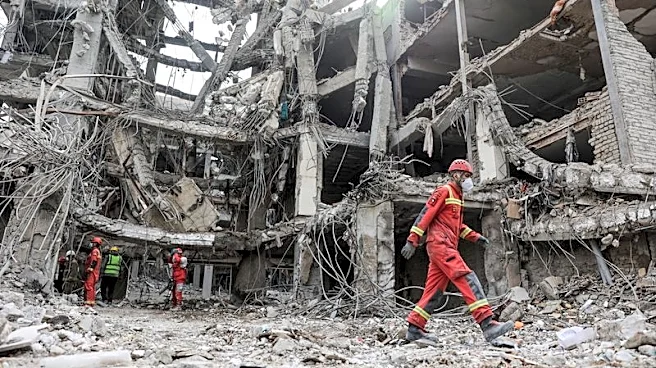
Gaza, and Iran, as well as tensions between the U.S. and China over Taiwan. He warned that the odds of at least one major conflict occurring in the next five years are greater than 50%. Dalio emphasized that the Iran conflict, particularly the fight for control over the Strait of Hormuz, has significant global repercussions. He also noted that the world is shifting from a rules-based order led by the U.S. to a 'might-is-right' order without a single dominant power, which could lead to more conflicts.
Why It's Important?
Dalio's analysis underscores the potential for increased geopolitical instability and its impact on global markets and political dynamics. The shift from a rules-based world order to one driven by power dynamics could lead to more frequent and intense conflicts, affecting international trade, economic growth, and diplomatic relations. The U.S., despite being a major power, may face challenges in maintaining its influence and managing its resources effectively. This evolving geopolitical landscape could have far-reaching implications for global economic stability and security, influencing investment decisions and policy-making.
What's Next?
As the U.S. and Iran have reached a temporary ceasefire, the focus will be on how the situation evolves and its impact on global power dynamics. The outcomes of these conflicts will influence the future world order and the role of major powers like the U.S. and China. Policymakers and businesses will need to navigate this uncertain environment, considering the potential for further conflicts and their economic and political consequences. The international community will be closely watching how these developments unfold and their implications for global stability.