
What's Happening?
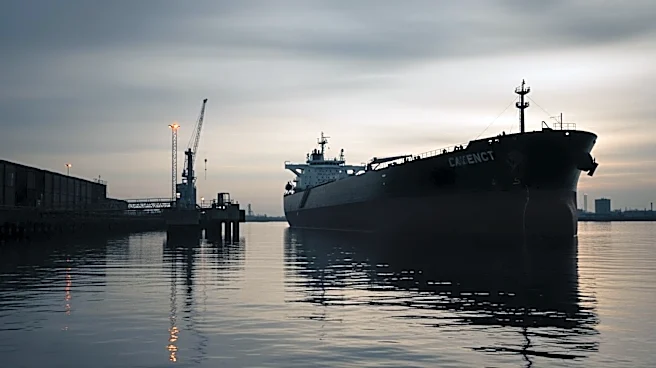
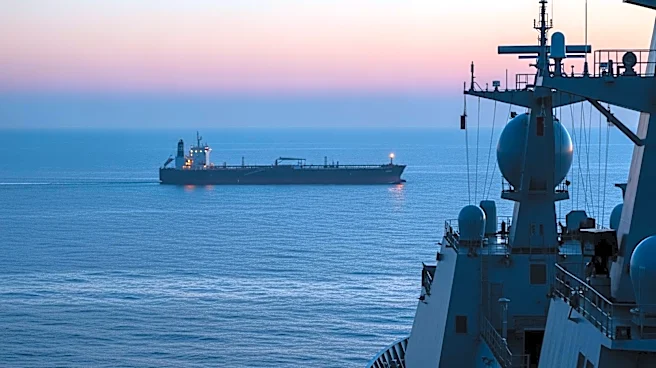
The United States has conducted another maritime interdiction, boarding a stateless tanker in the Indian Ocean suspected of carrying Iranian oil. The U.S. Indo-Pacific Command reported that the tanker,
identified as Davina, was attempting to conceal its location approximately 20 miles southwest of Sri Lanka. The vessel, which falsely claimed registry in Curacao and previously under Palau, was sanctioned by the U.S. in 2024 for its involvement in the Iranian oil trade. The tanker is reportedly transporting 1.9 million barrels of Iranian crude oil, having loaded at Kharg Island. This operation marks the third such interdiction by U.S. forces since mid-April, as part of efforts to enforce a blockade on Iranian shipping.
Why It's Important?
This interdiction is part of a broader U.S. strategy to enforce sanctions against Iran, particularly targeting its oil exports, which are a significant source of revenue for the country. By intercepting vessels involved in the Iranian oil trade, the U.S. aims to disrupt illicit networks and pressure Iran economically. These actions have implications for international maritime trade and highlight the ongoing geopolitical tensions surrounding Iran's oil exports. The enforcement of these sanctions is crucial for maintaining the effectiveness of U.S. foreign policy objectives in the region, but it also risks escalating tensions with countries involved in the Iranian oil trade.
What's Next?
The U.S. is likely to continue its maritime enforcement operations to ensure compliance with sanctions against Iran. This may involve further interdictions and increased surveillance in strategic maritime regions. The international community, particularly countries involved in maritime trade with Iran, will be closely watching these developments. Potential diplomatic responses or adjustments in shipping routes may occur as stakeholders seek to navigate the complexities of U.S. sanctions enforcement.