




What's Happening?
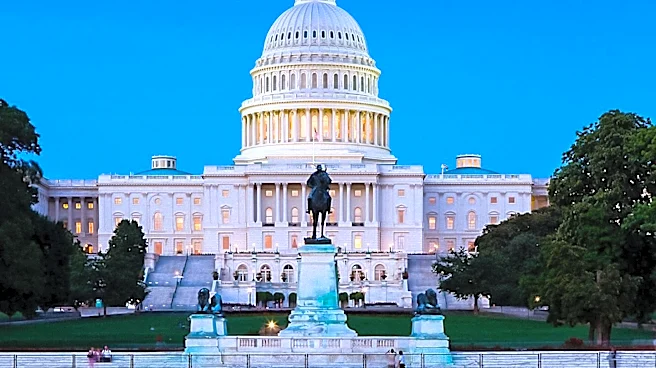
Representative Sharice Davids (KS-03) recently joined families of victims from Flight 5342, safety professionals, and a bipartisan group of lawmakers at the Capitol to advocate for immediate passage of aviation safety legislation. This gathering occurred
over 22 months after the tragic midair collision involving Flight 5342, which resulted in 67 fatalities, including Kansans. Davids emphasized the non-partisan nature of aviation safety, stating it is a 'human issue.' The U.S. House previously passed Davids’ bipartisan ALERT Act, which is supported by the National Transportation Safety Board (NTSB). This legislation aims to upgrade aircraft collision warning systems, enhance air traffic controller training, improve airspace communication, review airspace congestion and airport capacity, and bolster military aviation safety. Davids also supported the Rotorcraft Operations Transparency and Oversight Reform (ROTOR) Act, which failed to pass the House but is backed by victims' families and safety experts. She is now working to combine the strongest provisions of both bills to ensure comprehensive aviation safety reforms are enacted.
Why It's Important?
The push for aviation safety legislation is critical for several reasons. The tragic loss of 67 lives in the Flight 5342 collision underscores the urgent need for improved safety measures to prevent future incidents. The bipartisan nature of this effort, involving lawmakers from both parties and support from the NTSB, highlights a shared recognition of the issue's importance beyond political divides. For the aviation industry, the proposed legislation, particularly the ALERT Act, would mandate significant upgrades to collision warning systems and improvements in air traffic control and communication. This could lead to increased operational costs for airlines and airports but would ultimately enhance passenger and crew safety. For the public, these reforms aim to restore and maintain confidence in air travel, which is vital for both personal and business travel. The involvement of victims' families in advocating for these changes adds a powerful human element, ensuring that the legislative process is driven by a commitment to preventing similar tragedies and honoring those lost.
What's Next?
The immediate next step involves Congress reconciling the aviation safety measures passed by both the House and the Senate. Representative Davids and her bipartisan colleagues are urging leaders to combine the most effective provisions from these bills and pass comprehensive reforms before the current congressional session concludes. The families of Flight 5342 victims and their supporters are actively pressing Congress to act swiftly, emphasizing that they cannot afford to wait another year for these critical safety improvements. While the House has passed Davids' ALERT Act, and the ROTOR Act was supported by many, the challenge lies in synthesizing these efforts into a single, enforceable law. The timeline for a full House vote on a combined bill remains unclear, but the ongoing advocacy from lawmakers and affected families suggests continued pressure for legislative action in the near future.
Beyond the Headlines
Beyond the immediate legislative push, this event highlights broader implications for public trust and governmental accountability. The sustained advocacy by the victims' families transforms personal grief into a powerful force for systemic change, demonstrating how grassroots efforts can influence national policy. The bipartisan collaboration on aviation safety also serves as a model for addressing complex issues in a politically divided landscape. Ethically, the situation raises questions about the balance between technological advancement and regulatory oversight in rapidly evolving sectors like aviation. The NTSB's support for the ALERT Act underscores the importance of expert recommendations in shaping safety protocols. Long-term, successful implementation of these reforms could set new precedents for aviation safety standards, potentially influencing international regulations and fostering a culture of continuous improvement within the global aviation industry.