



What's Happening?
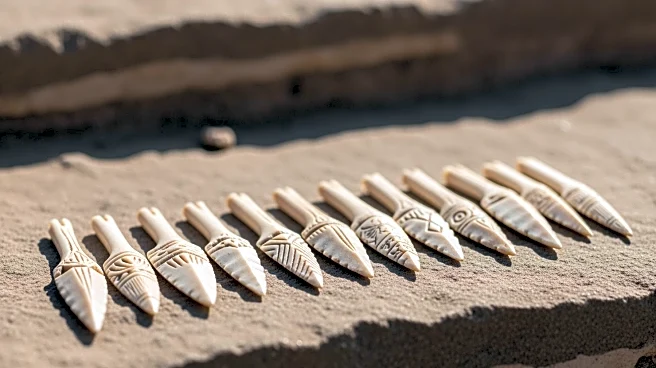
A recent study has shed light on the organized craft production of bone arrow points by prehistoric communities in the Sierras de Córdoba, Argentina. Conducted by Dr. Matías Medina and colleagues, the research focuses on the Late Prehispanic Period, approximately
1220 to 330 cal BP. The study, published in the International Journal of Osteoarchaeology, analyzes the manufacturing techniques of bone arrow points, a significant yet previously understudied aspect of these communities' material culture. The research involved examining 117 bone artifacts from the Museo Arqueológico Numba Charava, revealing that the primary raw material was Lama bones, likely from guanacos. These bones were crafted into arrowheads through a process of splitting, grinding, and polishing. The study highlights the role of these tools in warfare and their potential as markers of social identity.
Why It's Important?
This research is crucial as it fills a significant gap in understanding the technological and social organization of prehistoric communities in Argentina. By revealing the standardized yet unique production of bone arrow points, the study underscores the importance of the nuclear family in tool-making and subsistence strategies during the Late Prehispanic Period. The findings also suggest that these communities had a sophisticated understanding of available resources and adapted their technologies accordingly. This research not only enhances knowledge of prehistoric Argentine societies but also provides a framework for comparing technological practices across different regions and time periods, offering insights into the broader cultural and economic dynamics of ancient South American societies.
What's Next?
Future research could involve comparing the bone technology of the Sierras de Córdoba with neighboring regions, such as the Low Paraná and Uruguay River floodplains. These areas, located over 500 km away, developed complex bone technologies due to limited stone resources and a reliance on aquatic resources. By examining these differences, researchers can gain a deeper understanding of the technological adaptations and subsistence strategies employed by various prehistoric communities. Such comparative studies could further illuminate the cultural exchanges and technological innovations that occurred across South America during the Late Prehispanic Period.