




What's Happening?
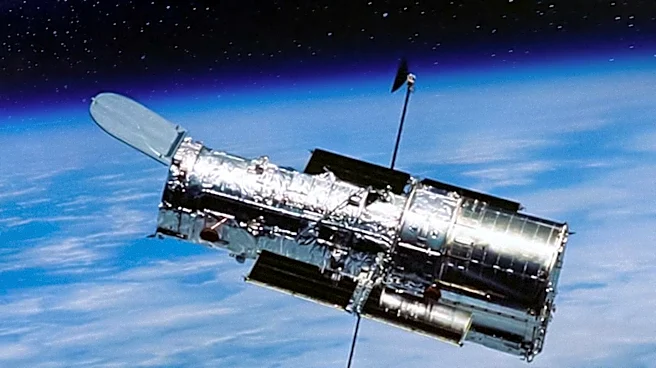
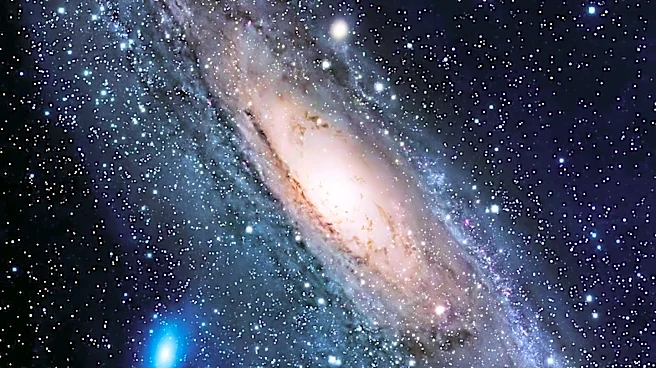
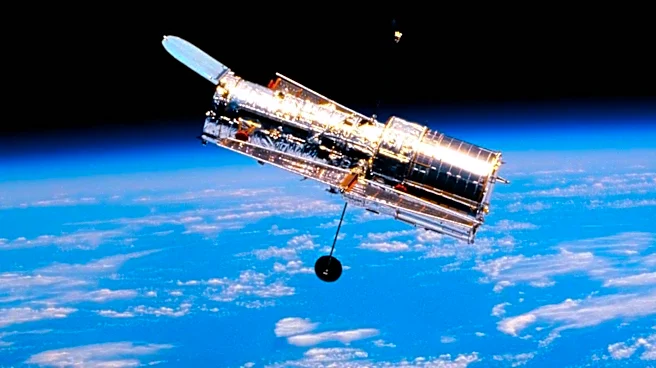
A study using NASA's Hubble Space Telescope data has revealed a significant decline in star formation within the Andromeda galaxy over the past 500 million years. The research, published in The Astrophysical Journal, indicates a steep drop in star formation in the last
40 million years. The study utilized data from two Hubble surveys, mapping two-thirds of Andromeda's disk and measuring about 200 million individual stars. The findings suggest that the decline is not due to a lack of material but rather a natural winding down from a previously more active state.
Why It's Important?
Understanding the star formation history of Andromeda, a galaxy similar in size to the Milky Way, provides valuable insights into the evolutionary processes of galaxies. The decline in star formation could inform theories about galactic interactions and the lifecycle of galaxies. This research enhances our comprehension of cosmic phenomena and the factors influencing galactic development, potentially impacting future studies of our own galaxy and others.
What's Next?
The research team plans to continue analyzing Hubble data and combine it with ground-based observations to further explore Andromeda's history. The upcoming launch of NASA's Nancy Grace Roman Space Telescope, with its wide field of view, will allow for more comprehensive studies of Andromeda and its surrounding regions. These efforts aim to deepen our understanding of galactic evolution and the factors driving changes in star formation rates.