



What's Happening?
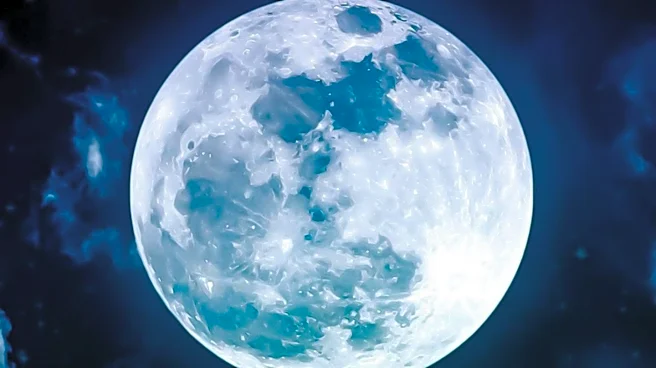
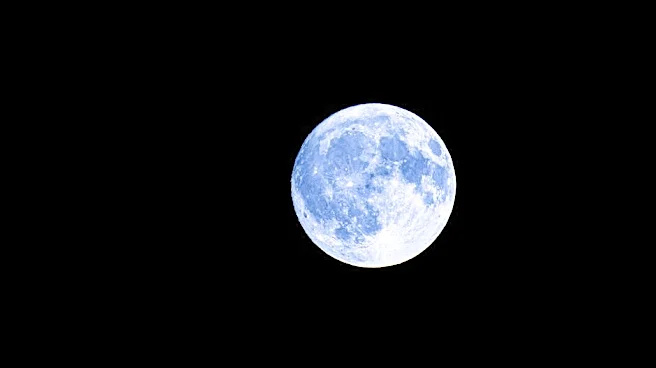
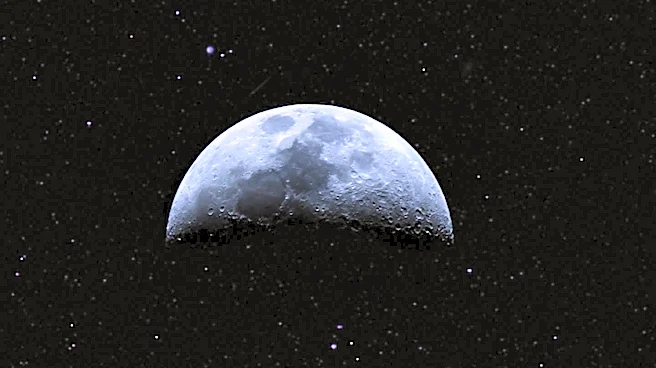
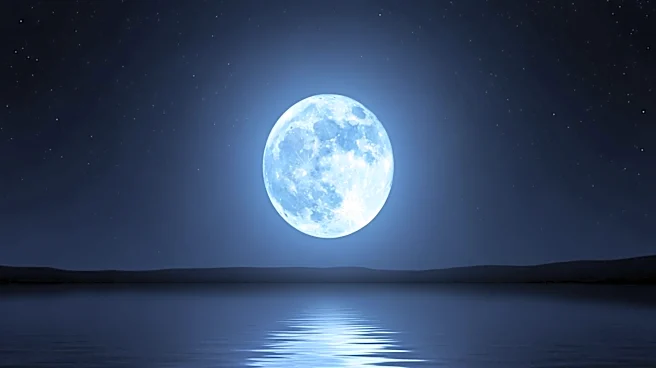
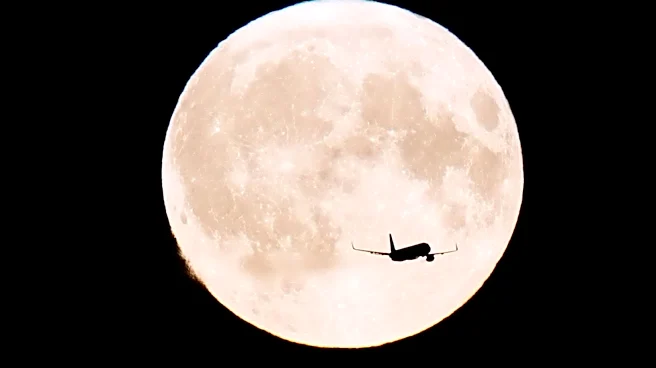
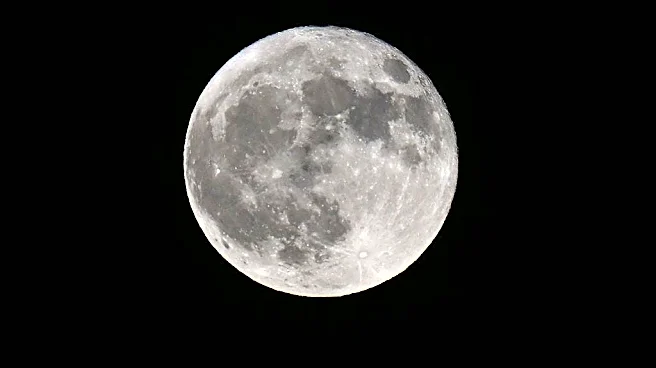
A rare astronomical event, known as a 'Blue Moon,' is set to occur tonight, marking the second full moon of May 2026. This phenomenon will be visible as the moon rises in the eastern sky at sunset, reaching its peak illumination at 4:45 a.m. EDT on May 31.
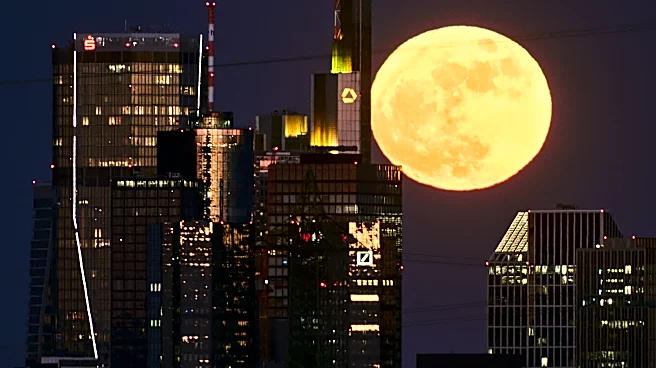
The Blue Moon will appear near the red supergiant star Antares in the constellation Scorpius, offering a unique viewing experience. Despite its name, the Blue Moon will not appear blue; instead, it may exhibit orange-red hues during moonrise and moonset due to atmospheric conditions. This event is notable because a Blue Moon, defined as the second full moon in a calendar month, happens approximately once every 2.5 years. Additionally, Jupiter, Venus, and Mercury will align above the western horizon, adding to the celestial display.
Why It's Important?
The Blue Moon event is significant for both amateur and professional astronomers, as it provides a rare opportunity to observe and photograph a unique lunar occurrence. This event highlights the intricate dance of celestial bodies and the variations in lunar cycles. For the general public, it offers a chance to engage with astronomy and appreciate the natural wonders of the night sky. The alignment of other planets such as Jupiter, Venus, and Mercury further enhances the spectacle, encouraging interest in space and science. Such events can inspire educational activities and discussions about astronomy, potentially fostering a greater appreciation for science and the universe.
What's Next?
Following the Blue Moon, astronomers and skywatchers will continue to monitor and document other celestial events throughout the year. The next Blue Moon is expected to occur in the Americas, Africa, and Europe on the night of May 30, 2028. In the meantime, enthusiasts can look forward to other astronomical phenomena, such as meteor showers and planetary alignments. Educational institutions and observatories may organize events and workshops to capitalize on the public's interest in astronomy sparked by the Blue Moon. Additionally, advancements in technology and equipment will continue to enhance the ability to capture and study such events in greater detail.