
What's Happening?
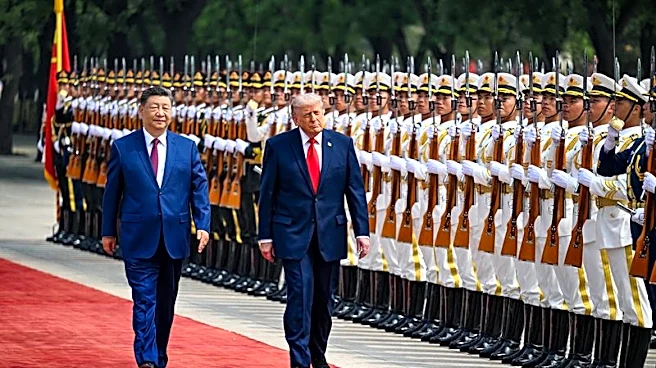
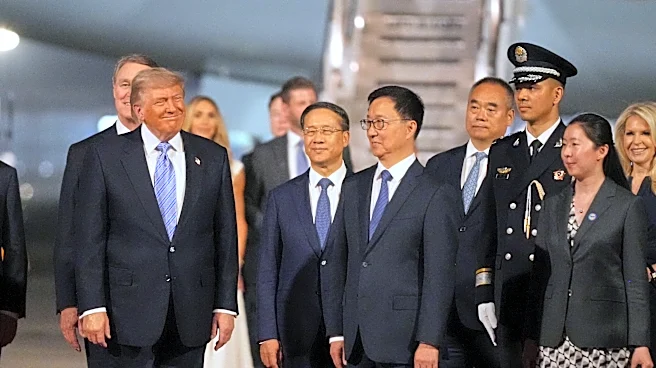
During a two-day summit in Beijing, Chinese leader Xi Jinping conveyed to U.S. President Donald Trump that China is surpassing the United States as a global power. Xi emphasized China's strategic advancements
in economic and military domains, framing the meeting as a pivotal moment in U.S.-China relations. The summit, marked by ceremonial grandeur, was a platform for Xi to articulate China's vision of a 'great rejuvenation,' aiming to restore its historical prominence. Xi's remarks highlighted China's long-term strategy to expand its influence, contrasting with the U.S.'s current geopolitical stance. The discussions also touched on trade, with Xi and Trump negotiating terms following previous trade tensions.
Why It's Important?
The summit underscores a significant shift in global power dynamics, with China positioning itself as a peer to the United States. This development has profound implications for international relations, trade policies, and global economic structures. China's assertive stance challenges the U.S.'s traditional dominance, potentially altering alliances and economic partnerships. The outcome of these discussions could influence global markets, affect international trade agreements, and reshape geopolitical strategies. Stakeholders in both countries, including businesses and policymakers, must navigate this evolving landscape, balancing competition with cooperation.
What's Next?
Future engagements between the U.S. and China are anticipated, with Xi planning a state visit to the U.S. later this year. These meetings will likely address ongoing trade issues, technological cooperation, and regional security concerns. The U.S. response to China's growing influence will be critical, as it may involve strategic adjustments in foreign policy and economic strategies. Observers will watch for any shifts in U.S. policy towards Taiwan, a contentious issue in Sino-American relations. The outcomes of these interactions could set the tone for future bilateral relations and impact global stability.
Beyond the Headlines
The summit highlights deeper geopolitical tensions, particularly the 'Thucydides Trap,' where a rising power threatens an established one, potentially leading to conflict. This historical analogy underscores the need for careful diplomatic navigation to avoid escalation. The ethical and strategic considerations of such power shifts are significant, as they involve national security, economic sovereignty, and global governance. The U.S. and China must find a balance between competition and collaboration to maintain international peace and stability.