



What's Happening?
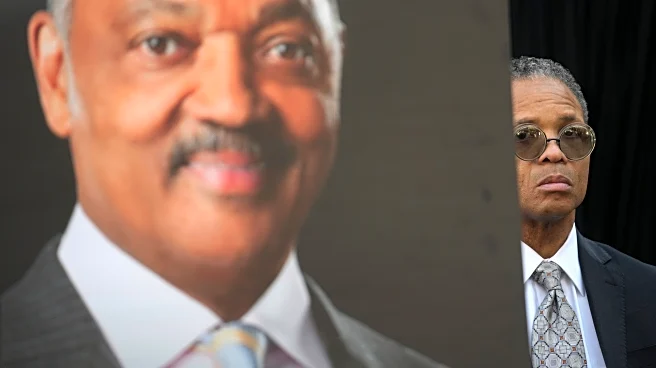
Speaker Mike Johnson has denied a request for the late Rev. Jesse Jackson to lie in honor in the U.S. Capitol rotunda. Jackson, a civil rights icon and two-time presidential candidate, passed away at the age of 84. The request was made by Jackson's family,
but Johnson cited precedent, noting that the honor is typically reserved for former presidents, military leaders, and top government officials. The decision has drawn criticism from Black leaders and the NAACP, who argue that Jackson's contributions to civil rights and American society warrant such recognition.
Why It's Important?
The denial of the request for Jesse Jackson to lie in honor at the Capitol has sparked a debate about the criteria for such honors and the recognition of civil rights leaders. Jackson's contributions to the Civil Rights Movement and his influence on American politics are significant, and the decision not to honor him in this way has been seen by some as a disregard for his legacy. This incident highlights ongoing discussions about racial equality and the recognition of Black leaders in American history. It also reflects broader political dynamics and the interpretation of historical precedents in honoring public figures.
What's Next?
The decision may lead to further discussions and potential actions by civil rights organizations and political leaders advocating for greater recognition of Jesse Jackson's legacy. It could also prompt a reevaluation of the criteria for lying in honor at the Capitol, potentially leading to changes in how such decisions are made. Public and political reactions may continue to unfold, influencing future decisions regarding the recognition of civil rights leaders and their contributions to American society.