
What's Happening?
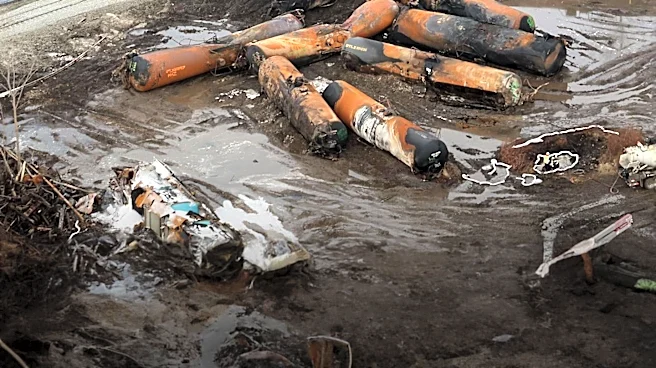
A rail car transporting liquefied propane derailed and rolled over near the Park Street rail crossing in Rutland City on the evening of September 11. The incident prompted an immediate response from state
and local hazardous-materials crews, including the Vermont State Hazmat Team, the Rutland City Fire Department, and the Vermont Rail System. Officials confirmed that the propane tank remained intact, and no propane leaked as a result of the derailment. Authorities quickly assessed the situation and determined that the incident posed no threat to public health, safety, or the environment. Hazmat personnel and Rutland firefighters remained on scene while Vermont Rail System crews worked to rerail the tank car, and the public was advised to avoid the Park Street area.
Why It's Important?
This incident highlights the critical importance of rapid and coordinated emergency response protocols for hazardous materials transportation. The swift action by the Vermont State Hazmat Team, Rutland City Fire Department, and Vermont Rail System prevented a potentially dangerous situation from escalating. The fact that the propane tank was not compromised and no leak occurred is a testament to the safety measures in place for such cargo and the effectiveness of the emergency response. This event underscores the ongoing need for robust infrastructure maintenance and stringent safety regulations in rail transport, particularly for hazardous materials, to protect both the environment and public safety in communities like Rutland City.
What's Next?
Vermont Rail System crews will continue their efforts to rerail the propane tank car and ensure the safe removal of the affected rail car from the Park Street crossing area. Following the rerailing, investigations will likely be conducted to determine the exact cause of the derailment, which could lead to potential adjustments in rail maintenance practices or operational procedures. Local authorities will also review the emergency response to identify any areas for improvement in future incidents. The public can expect continued updates regarding the full restoration of normal rail operations and any traffic advisories related to the cleanup efforts in the affected area.
Beyond the Headlines
This derailment, despite its non-hazardous outcome, brings to light broader discussions about the safety of rail transport for hazardous materials through populated areas. It serves as a reminder of the inherent risks associated with such transportation and the continuous need for vigilance from regulatory bodies and rail operators. The incident could prompt local and state officials to re-evaluate emergency preparedness plans and community awareness programs regarding rail safety. Furthermore, it may fuel public discourse on infrastructure investment and the implementation of advanced safety technologies to prevent future derailments, ensuring the long-term protection of communities situated along rail lines.