


What's Happening?
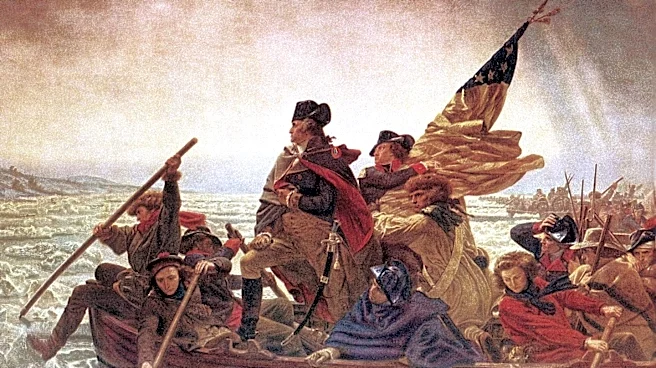
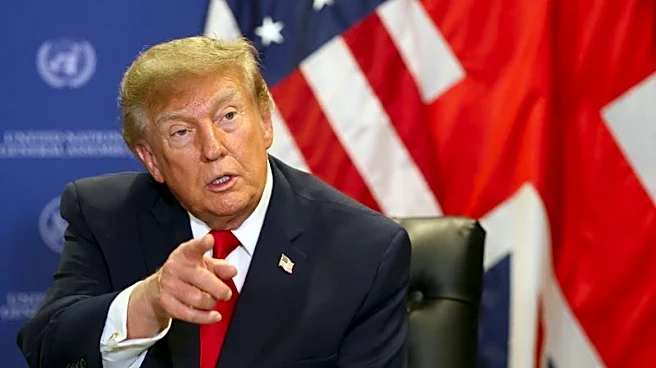
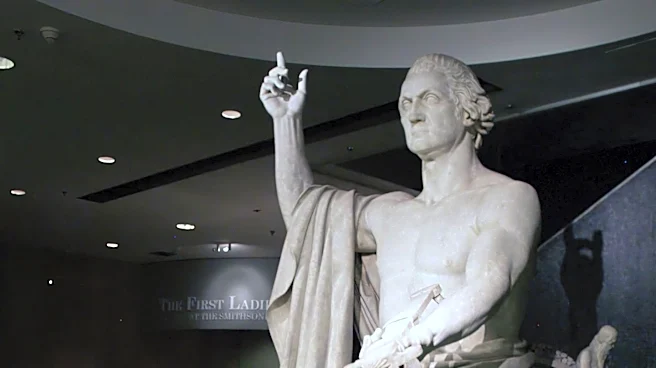
The Smithsonian Institution, a collection of 21 museums and other institutions primarily funded by Congress, is facing increased scrutiny and attempts at influence from the Trump administration. President Trump has proposed placing a "colossus" George
Washington statue outside the National Museum of American History and adding warning signs to museum content, alleging bias. This comes as conservatives express concerns that the Smithsonian has adopted progressive viewpoints on race, gender, and politics. Despite its mixed funding and governance structure, which includes both public officials and private citizens, the Smithsonian has historically maintained independence from the federal government. However, recent actions, such as the institution bypassing Congress to build a new Latino American museum, highlight ongoing tensions regarding its autonomy and direction.
Why It's Important?
The ongoing conflict between the Trump administration and the Smithsonian Institution is significant because it challenges the historical independence of a major cultural and educational entity in the U.S. The potential for political intervention in museum content and exhibitions raises questions about academic freedom, historical interpretation, and the role of public institutions in shaping national narratives. If the Smithsonian's independence is compromised, it could set a precedent for future administrations to exert control over other federally funded cultural organizations, potentially leading to a politicization of history and art. Calls for the Smithsonian's privatization, as suggested by some, underscore a fundamental debate about whether such institutions should remain publicly funded and governed, or if they would better serve their mission as independent private entities, free from governmental pressures but also potentially losing a stable funding source.
What's Next?
The future of the Smithsonian Institution's independence remains uncertain. The departure of the Secretary of the Smithsonian and the institution's decision to proceed with a new Latino American museum without direct congressional approval indicate a potential for continued friction with the federal government. Discussions around the institution's funding model and governance structure are likely to intensify, with proposals ranging from complete privatization to a re-evaluation of its relationship with Congress. Stakeholders, including political leaders, cultural preservation groups, and the public, will likely continue to debate the appropriate balance between government oversight and institutional autonomy for the Smithsonian. The outcome could redefine how major cultural institutions operate in the U.S. and their susceptibility to political influence.
Beyond the Headlines
Beyond the immediate political skirmishes, this situation highlights deeper ethical and cultural implications regarding the stewardship of national heritage. The debate over the Smithsonian's content and its perceived progressive leanings reflects broader societal divisions over historical interpretation and cultural values. The push for warning signs on museum exhibits, for instance, touches upon the ethical responsibility of institutions to present history objectively versus acknowledging diverse perspectives and evolving understandings. The long-term shift could see a re-evaluation of how public institutions balance their educational mission with the expectations of various political and social groups, potentially leading to more explicit guidelines on content curation or a greater emphasis on private funding to ensure independence. This struggle underscores the ongoing challenge of maintaining non-partisanship in cultural institutions within a highly polarized political landscape.