








What's Happening?
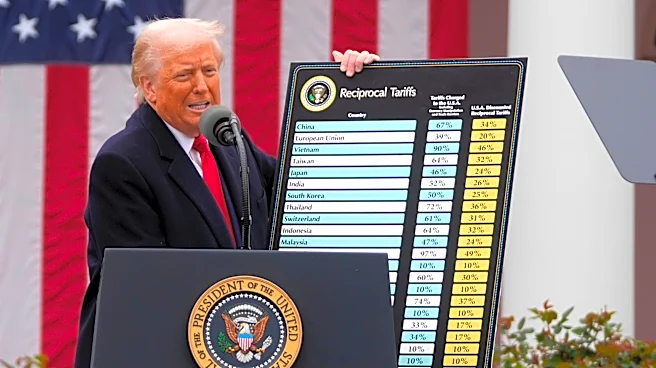
President Trump has announced the imposition of 50% tariffs on most Canadian goods, citing unfair trade practices by Canada against American products such as autos, alcohol, and dairy. This move is expected to strain the economic relationship between
the U.S. and Canada, potentially leading to higher inflation and further political tensions. The tariffs, which exclude energy products, potash, fish, and critical minerals, are set to take effect in 30 days, allowing time for potential negotiations. Canadian Prime Minister Mark Carney has expressed willingness to engage in talks to resolve the trade dispute. The tariffs are part of a broader strategy by the Trump administration to address trade imbalances, but they also carry significant political risks ahead of the upcoming midterm elections.
Why It's Important?
The imposition of these tariffs could have significant economic repercussions, potentially leading to increased prices for American consumers and retaliatory measures from Canada. This development comes at a time when the U.S. economy is already grappling with rising inflation and geopolitical tensions. The tariffs could also impact President Trump's political standing, as they may exacerbate concerns about his handling of the economy. Additionally, the use of a Great Depression-era law to justify the tariffs raises legal and ethical questions, potentially setting a precedent for future trade actions. The situation underscores the complexities of international trade and the potential for economic policies to have far-reaching consequences.
What's Next?
In the coming weeks, both the U.S. and Canada are expected to engage in negotiations to address the trade dispute. The 30-day window before the tariffs take effect provides an opportunity for diplomatic efforts to prevent further escalation. However, if negotiations fail, Canada may retaliate with its own tariffs, leading to a broader trade war. The outcome of these negotiations will be closely watched by businesses and policymakers, as it could influence future trade policies and economic relations between the two countries. Additionally, the political implications of the tariffs will likely play a role in the upcoming midterm elections, as voters assess the impact of President Trump's trade policies on the economy.