



What's Happening?
Poland and the United Kingdom have agreed to collaborate on a training program for helicopter pilots, focusing on countering air and missile threats. This initiative is part of the NATO Flight Training Europe (NFTE) program. Starting in the summer of 2026,
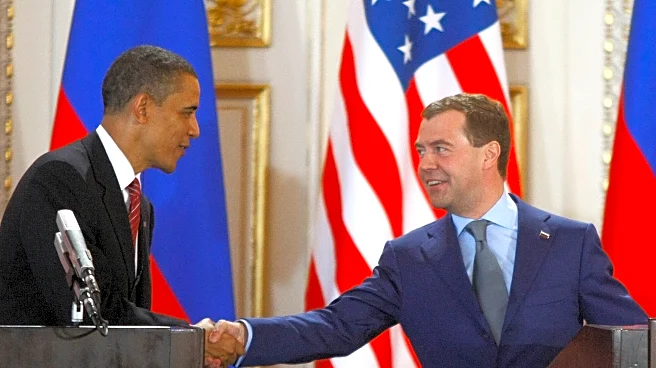
eight Polish helicopter pilots will undergo training in the UK, with two experienced Polish pilots facilitating the joint training at RAF Shawbury. The training will be conducted in a virtual environment, emphasizing attack helicopter tactics without live fire exercises. This collaboration aims to enhance the capabilities of both nations' military forces, particularly in operating AH-64E Apache attack helicopters. The UK and Polish leaders, Prime Minister Keir Starmer and President Karol Nawrocki, respectively, have emphasized the importance of this training in improving their military readiness against air threats.
Why It's Important?
This training collaboration between Poland and the UK is significant as it strengthens military ties within NATO and enhances the defense capabilities of both countries. By focusing on attack helicopter tactics, the program aims to prepare pilots for modern warfare challenges, including countering advanced air threats. The use of virtual training environments allows for cost-effective and safe skill development, although it may not fully replicate real-world conditions. This initiative also reflects Poland's strategic shift towards modernizing its military equipment, as evidenced by its recent procurement of 96 AH-64E Apache helicopters. The collaboration could lead to improved interoperability between NATO allies, enhancing collective security in the region.
What's Next?
The training program is set to begin in the summer of 2026, with Polish pilots transitioning to the AH-64E Apache variant. As the program progresses, both countries may explore further joint military initiatives to strengthen their defense capabilities. The success of this training could influence other NATO members to adopt similar collaborative approaches, potentially leading to broader defense cooperation within the alliance. Additionally, the focus on virtual training environments may drive further innovation in military training technologies, offering new opportunities for skill development without the risks associated with live exercises.