


What's Happening?
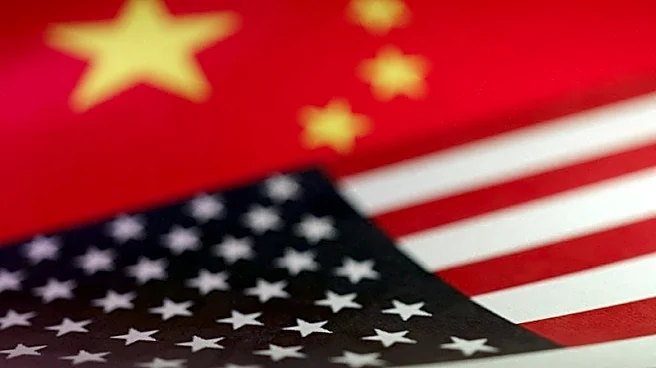
A new report from the Center for a New American Security (CNAS) indicates that the U.S. will encounter significant challenges in assembling a unified global sanctions coalition if China were to alter the status quo in the Taiwan Strait. The report emphasizes
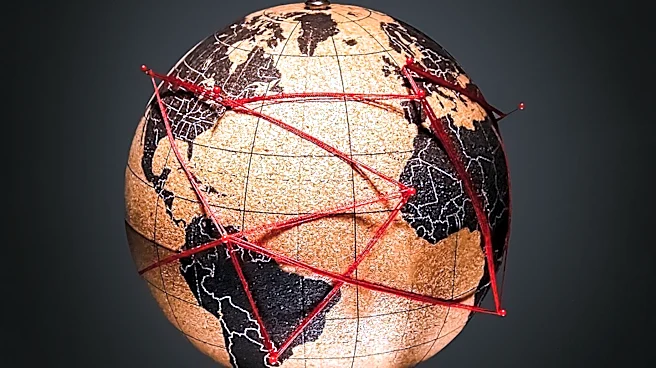
that a uniform approach will not be effective, necessitating partner-specific strategies tailored to the unique political and economic conditions of key nations such as Germany, Singapore, and India. These countries were chosen for their distinct combinations of geopolitical alignment, economic exposure to China, and institutional capacity. Germany, a close U.S. security partner, has substantial economic ties with China. Singapore, a vital financial and trade hub, aims to balance influence between the U.S. and China. India, a major power, possesses limited sanctions tools but significant geopolitical weight in the Global South. The report's findings are based on extensive interviews with stakeholders from these regions, research trips, and roundtable discussions in Washington and New Delhi. It concludes that while a sanctions coalition is possible, it is far from guaranteed, largely due to China's deep economic integration creating strong disincentives for these partners to impose or escalate sanctions.
Why It's Important?
This report is crucial for U.S. foreign policy and national security, highlighting the complexities of international cooperation in confronting potential Chinese aggression. The U.S. cannot assume automatic alignment from key global partners, even on issues of significant geopolitical concern like Taiwan. The varying economic dependencies and geopolitical orientations of countries like Germany, Singapore, and India mean that a one-size-fits-all sanctions approach is impractical. This necessitates a more nuanced and tailored diplomatic strategy, focusing on rebuilding trust and making a clear, interest-based case for coordinated economic pressure. The potential inability to form a robust sanctions coalition could weaken the U.S.'s deterrent capabilities against China and impact its ability to respond effectively to a crisis in the Taiwan Strait. Furthermore, it underscores the growing influence of China's economic power, which can create significant disincentives for other nations to participate in U.S.-led economic pressure campaigns, thereby complicating global efforts to maintain stability and international norms.
What's Next?
The CNAS report recommends that the U.S. must stabilize its Taiwan policy, actively work to rebuild trust with its partners, and articulate a clear, interest-based rationale for coordinated economic pressure. For Germany, the U.S. should pursue tight alignment, making clear expectations for strong sanctions in a Taiwan contingency and initiating joint planning on financial sanctions, technology controls, and supply-chain derisking. Financial sanctions and technology controls are identified as priority areas for engagement. For Singapore, the report suggests a 'closer alignment' focused on enforcement support, as the city-state is unlikely to impose its own sanctions due to its economic exposure and balancing strategy. Quiet support for U.S. sanctions and cooperation on enforcement, particularly among banks and trading firms, would be valuable. India, with its limited sanctions infrastructure, would fall into a looser alignment category, where the U.S. should leverage its diplomatic influence and long-term economic potential, rather than expecting direct sanctions action. This includes rallying Global South support for Taiwan and contributing to 'deterrence through resiliency' by serving as an alternative manufacturing base.
Beyond the Headlines
The report's implications extend beyond immediate policy recommendations, touching upon the evolving landscape of global power dynamics and economic interdependence. China's increasing willingness to use economic retaliation heightens concerns among potential coalition partners about the costs of supporting Taiwan, adding a layer of complexity to international relations. The shifting geopolitical context, including questions about the U.S.'s role as a security guarantor, further complicates the formation of such coalitions. This situation highlights a broader trend where economic ties can supersede traditional geopolitical alliances, forcing the U.S. to rethink its approach to international diplomacy and economic statecraft. The need for partner-specific strategies underscores a move away from a monolithic view of international relations towards a more granular understanding of each nation's unique constraints and incentives. This could lead to a more fragmented global response to future crises, challenging the efficacy of multilateral institutions and traditional alliance structures.