








What's Happening?
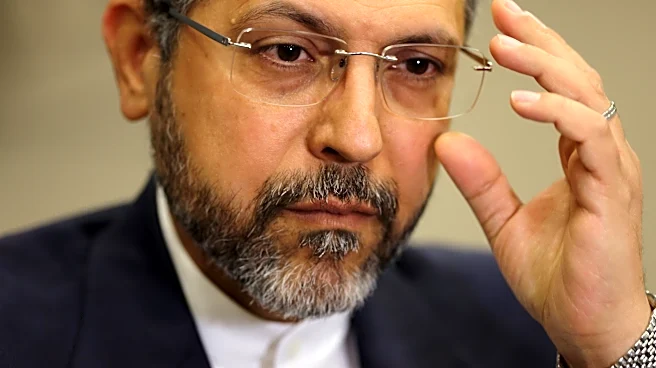
A significant dispute has emerged between Supreme Court President Isaac Amit and Justice Minister Yariv Levin regarding judicial appointments in Israel. The conflict was highlighted in a letter from Amit, Deputy President Noam Sohlberg, and Justice Dafna
Barak-Erez, accusing Levin of selectively advancing certain judicial appointments while blocking broader staffing efforts. The justices criticized Levin's approach, which they claim ignores critical shortages in district courts, particularly in Haifa and Beersheba. Levin's proposal focuses on traffic, family, and youth courts, but the justices argue that his plan is disconnected from the judiciary's actual needs. They demand that the Judicial Selection Committee proceed with candidate lists and voting under the statutory framework, emphasizing the need for majority votes for lower-court appointments.
Why It's Important?
This confrontation underscores a broader power struggle over judicial appointments in Israel, with significant implications for the judiciary's independence and functionality. The justices' challenge to Levin's approach highlights concerns about the politicization of judicial appointments and the potential impact on the judiciary's ability to serve the public effectively. The outcome of this dispute could influence the balance of power between the judiciary and the government, affecting the legal landscape and public trust in the judicial system. The situation also reflects ongoing debates about the ideological composition of the courts and the role of political influence in judicial appointments.
What's Next?
The next steps involve the Judicial Selection Committee's response to the justices' demands and Levin's proposal. The committee is expected to consider candidate submissions by May 3, with a meeting scheduled for June 7 to discuss promotions within the judiciary. The outcome of these discussions will be crucial in determining the future of judicial appointments in Israel. Stakeholders, including legal professionals and political leaders, will likely continue to debate the implications of this dispute, with potential legal challenges or reforms on the horizon.