


What's Happening?
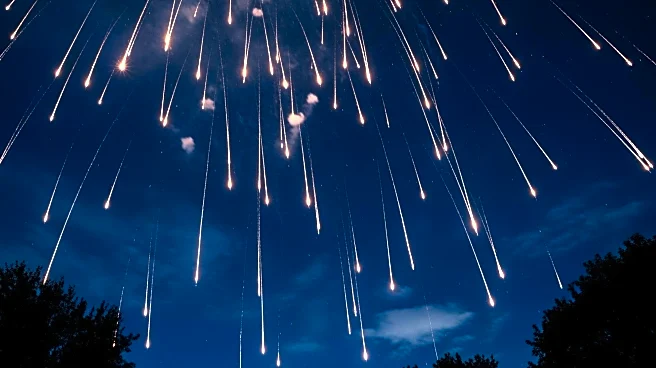
In March 2026, the United States experienced an unprecedented increase in fireball sightings, with reports rising from 1,587 in January to over 2,369 by March. These sightings, which spanned from Ohio to Texas, included a notable meteor explosion over Texas that
resulted in a fragment hitting a house. This surge has prompted discussions among scientists about whether Earth is experiencing an abnormal meteoric period or if the increase is due to heightened public awareness and reporting. Experts, including Nick Moskovitz, suggest that the rise in reports may be attributed to a combination of slightly elevated meteoric activity and increased media attention. Bill Cooke from NASA's Meteoroid Environment Office noted that the spring season typically sees a 10% to 30% increase in bright meteors, which could explain the heightened visibility during this period.
Why It's Important?
The surge in fireball sightings has significant implications for scientific research and public interest in meteoric activity. The increased reports could lead to a better understanding of meteoric patterns and the factors influencing them. For researchers, the data collected from these events can provide insights into the composition and behavior of meteors entering Earth's atmosphere. Additionally, the public's growing interest and the role of technology, such as vehicle cameras and security systems, in capturing these events highlight the importance of citizen science in contributing to scientific knowledge. While the increase in sightings may raise concerns about potential impacts, experts assure that these meteors pose little risk beyond localized damage.
What's Next?
Moving forward, scientists will likely continue to analyze the data from these sightings to determine if there is a genuine increase in meteoric activity or if the rise is primarily due to increased reporting. The role of technology in capturing these events will also be a focus, as automated systems and citizen reports contribute to a more comprehensive understanding of meteoric phenomena. Researchers may also explore the potential for developing better predictive models to anticipate periods of increased meteoric activity, which could enhance public safety and scientific research.