
What's Happening?
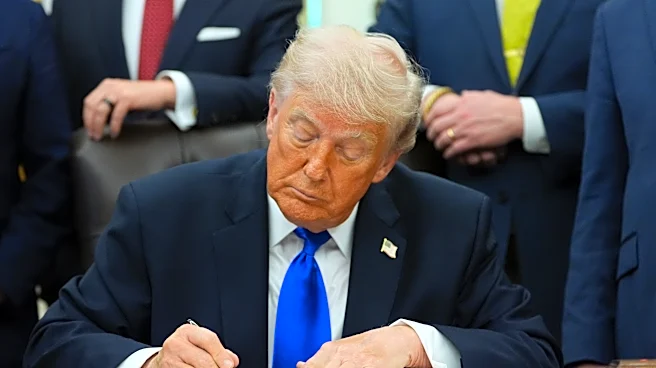
President Donald Trump has announced plans to raise tariffs on cars and trucks imported from the European Union to 25%, effective next week. This decision is part of ongoing disputes over the implementation
of a 2025 US-EU trade framework, which set a 15% ceiling on most goods. Trump has criticized the EU for not complying with the trade deal and suggested that automakers could avoid tariffs by producing vehicles in the U.S. The announcement has prompted concerns from industry representatives, who warn that increased tariffs could threaten recent progress in U.S.-EU trade relations.
Why It's Important?
The increase in tariffs could have significant repercussions for the automotive industry, affecting both U.S. consumers and EU automakers. Higher tariffs may lead to increased vehicle prices and reduced sales, impacting economic growth and employment in the sector. The decision also highlights the challenges of maintaining stable international trade agreements and the potential for unilateral actions to disrupt economic partnerships. The situation underscores the need for continued dialogue and negotiation to resolve trade disputes and promote economic stability.
What's Next?
The EU and U.S. are likely to engage in further negotiations to address the tariff increase and seek a resolution that aligns with the original trade agreement. Industry stakeholders may advocate for policy changes to mitigate the impact of tariffs and support economic growth. The outcome of these discussions will be critical in shaping the future of U.S.-EU trade relations and the stability of the global automotive market.