



What's Happening?
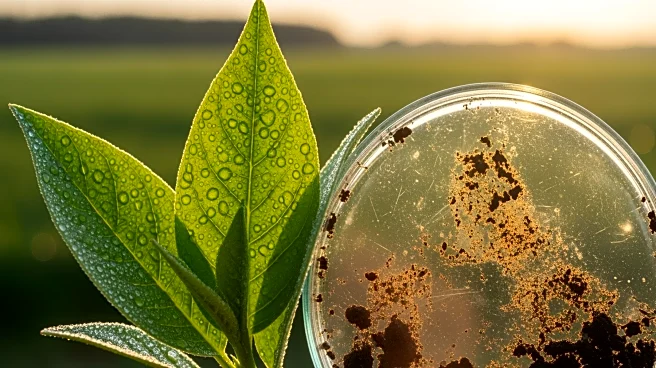
Recent research from The University of Manchester has highlighted the potential spread of Aspergillus fungus across Europe due to climate change. The study, led by Dr. Norman van Rhijn, used climate change scenarios to predict the expansion of Aspergillus species,
including A. flavus and A. fumigatus, which could increase their range significantly under high-emission pathways. This expansion poses a risk to millions of people, as these fungi are known to cause invasive infections, particularly in individuals with weakened immune systems. The study also noted the overlap between agricultural fungicide use and medical treatments, which may contribute to drug resistance in these fungi.
Why It's Important?
The spread of Aspergillus fungus in Europe could have significant implications for public health, agriculture, and the economy. As these fungi become more prevalent, hospitals may face increased cases of fungal infections, leading to higher healthcare costs and challenges in treatment due to drug resistance. Additionally, the agricultural sector could suffer from crop losses due to fungal contamination, impacting food security and economic stability. The study underscores the need for coordinated efforts to monitor and manage fungal threats, as well as the importance of addressing climate change to mitigate these risks.
What's Next?
Efforts to monitor and manage the spread of Aspergillus fungus will be crucial in the coming years. Public health agencies may need to enhance surveillance systems to track fungal infections and resistance patterns. Additionally, there may be a push for more research into developing new antifungal treatments and vaccines. On the agricultural front, strategies to reduce fungicide use and improve crop resilience could be explored. Addressing climate change through emission reductions could also play a key role in limiting the environmental conditions that favor fungal growth.
Beyond the Headlines
The study highlights the broader implications of climate change on pathogen spread and resistance. As global temperatures rise, other fungal species may also expand their range, posing additional threats to human health and ecosystems. The overlap between agricultural and medical fungicide use raises ethical and regulatory questions about the balance between protecting crops and ensuring effective medical treatments. Long-term strategies to address these challenges will require collaboration across sectors, including healthcare, agriculture, and environmental policy.