




What's Happening?
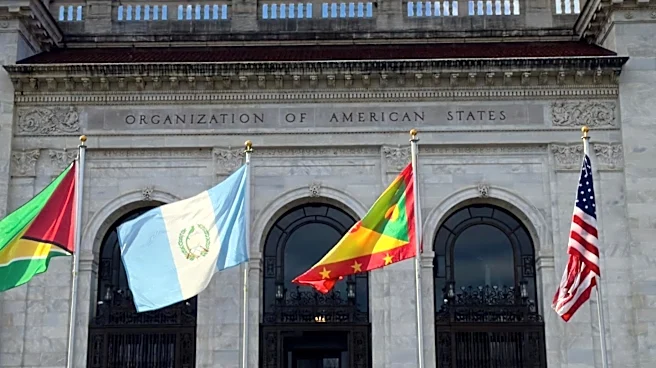
Sir Ronald Sanders, Antigua and Barbuda’s Ambassador to the Organization of American States (OAS) and Chair of the Inter-American Council for Integral Development (CIDI), has advocated for enhanced development cooperation between OAS member states and its
Permanent Observers. During a special meeting, attended by OAS Secretary General Albert Ramdin and representatives from 32 active OAS member states and Permanent Observers including the European Union, China, and Japan, Sir Ronald emphasized that development should be considered the foundation of the inter-American system, not a secondary concern. He argued that human rights, democracy, and security are undermined when development is inadequate, citing issues such as food insecurity, lack of healthcare access, limited educational opportunities, and fragile security due to economic exclusion. He also connected inadequate development to migration pressures, stating that migration often begins where hope and opportunity have ceased. Sir Ronald acknowledged the support provided by Permanent Observers in areas like democracy, human rights, and security but noted a comparative lack of attention to development in external partnerships.
Why It's Important?
This call for stronger development cooperation is significant for the U.S. and the broader Western Hemisphere as it highlights the interconnectedness of development with regional stability, security, and democratic governance. A more prosperous hemisphere, as Sir Ronald suggested, would lead to stronger markets, more reliable trading partners, and increased opportunities for investment and trade, which directly benefits U.S. economic interests. Conversely, continued economic exclusion and inadequate development can fuel political frustration, insecurity, and increased migration pressures, potentially impacting U.S. borders and resources. The emphasis on climate-resilient development, particularly for small island states, is also crucial given the increasing frequency and intensity of severe storms, which can lead to humanitarian crises and economic instability in the region, requiring international aid and intervention. By framing development cooperation as an investment in shared stability and prosperity, the initiative seeks to address root causes of regional challenges that often have direct or indirect consequences for the U.S.
What's Next?
Sir Ronald Sanders proposed that the recent meeting be the first in a series of practical engagements between CIDI and the Permanent Observers. The objective of these future engagements is to build partnerships and deliver measurable results in development cooperation. This suggests a sustained effort to integrate development more prominently into the OAS's external partnerships and to secure greater support for development initiatives across the hemisphere. The focus will likely be on identifying specific areas for collaboration, mobilizing resources, and implementing programs that address the underlying issues of economic inequality, lack of access to essential services, and climate vulnerability. The success of these efforts will depend on the continued engagement of both OAS member states and Permanent Observers, as well as their willingness to prioritize development as a core component of regional stability and progress.
Beyond the Headlines
The initiative by Sir Ronald Sanders delves into the deeper implications of development, moving beyond its traditional perception as mere aid. It reframes development as an essential prerequisite for the effective functioning of human rights, democracy, and security within the inter-American system. This perspective suggests that neglecting development creates systemic vulnerabilities that can lead to broader societal breakdowns, including increased crime, political instability, and mass migration. The argument that a lawful economy offering no credible opportunities fuels insecurity and migration pressures highlights the ethical imperative of equitable economic growth. Furthermore, the call for greater support for climate-resilient development for small island states underscores the long-term shifts required to address the disproportionate impact of climate change on vulnerable nations, emphasizing a proactive approach to prevent future crises rather than merely reacting to them. This holistic view positions development as a fundamental pillar for sustainable peace and prosperity in the Americas.