



What's Happening?
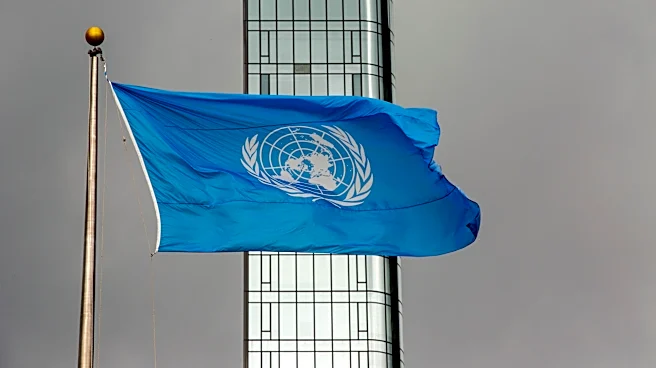
India has intensified its call for reform of the United Nations Security Council, asserting that global patience with the current structure has diminished. During recent negotiations, India’s Deputy Permanent Representative Yojna Patel stated that the Council has not
adequately fulfilled its core responsibilities concerning peace and security. Patel emphasized that any meaningful reform must include an expansion of permanent membership, warning that without this, the reform process would be incomplete. She dismissed the proposal for a 'third category' of seats, referred to as Fixed Regional Seats, as a tactic to delay and derail genuine reform efforts. This proposal, primarily advocated by the 'Uniting for Consensus' group led by Italy and including Pakistan, is seen by India as essentially no different from the existing non-permanent seats. India, along with the Group of 4 (G4) which includes Japan, Germany, and Brazil, is pushing for structural expansion to better reflect current geopolitical realities and correct existing imbalances within the Council.
Why It's Important?
The demand for UN Security Council reform, particularly the expansion of permanent membership, is critical for addressing the evolving global power dynamics. The current composition of the Security Council, established after World War II, no longer accurately represents the geopolitical landscape of the 21st century. Emerging economies and major global players like India, Brazil, Germany, and Japan are seeking greater influence and a more equitable distribution of power within the UN's most powerful body. A failure to reform could lead to a continued erosion of the Council's legitimacy and effectiveness in addressing contemporary international crises. The ongoing debate highlights a fundamental tension between the desire for broader representation and the resistance from some existing permanent members and other nations who fear a dilution of their influence or the creation of new power blocs. The outcome of these reform efforts will significantly impact the future of multilateralism and the UN's capacity to maintain international peace and security.
What's Next?
The push for UN Security Council reform is expected to continue, with India and the G4 nations maintaining pressure for an expansion of permanent membership. Secretary-General António Guterres is scheduled to brief Member States on the progress of the UN80 Initiative, which includes reform efforts, providing a platform for further discussions. The French presidency of the Security Council in September 2026 will also offer an opportunity to reiterate support for Council reform, although France has historically focused on regulating the use of the veto rather than expanding permanent seats. The 'Uniting for Consensus' group is likely to persist in advocating for its 'Fixed Regional Seats' proposal as an alternative to permanent membership expansion. The ongoing negotiations will likely involve continued diplomatic efforts, debates within the General Assembly, and potentially new proposals as member states seek a consensus on how to modernize the Security Council to better address global challenges.
Beyond the Headlines
The debate over UN Security Council reform extends beyond mere procedural changes; it touches upon fundamental questions of global governance, equity, and the distribution of power in the international system. The current structure, with its five permanent members holding veto power, often faces criticism for its perceived anachronism and its inability to effectively address conflicts where the interests of permanent members diverge. The call for expanded permanent membership by nations like India reflects a broader shift in global economic and political influence, challenging the post-World War II order. The resistance to reform, particularly from some existing permanent members and the 'Uniting for Consensus' group, highlights the deep-seated geopolitical rivalries and the reluctance to cede power. The long-term implications of this stalemate could include a weakening of the UN's authority, a rise in alternative multilateral forums, and a potential decline in the effectiveness of collective security mechanisms, ultimately impacting global stability and cooperation.