


What's Happening?
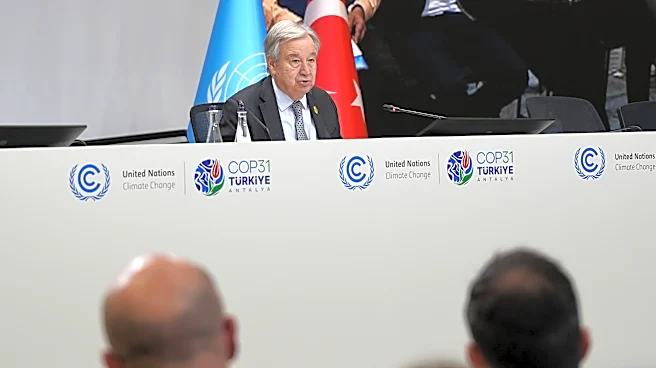
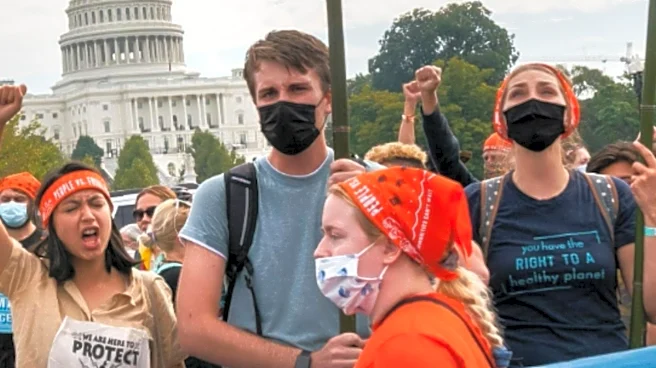
As official COP31 negotiations remain divided over the future of fossil fuels, activists and frontline communities are convening at the Peoples’ Climate Summit in Antalya to advocate for a rapid transition to a fossil-free future. Organized by groups
like 350.org, the summit emphasizes 'Energy Democracy Day,' demanding an end to fossil fuel expansion and a transition that prioritizes people over polluters. Speakers highlighted that countries like Türkiye and Australia, chairing COP31, lack clear coal phase-out plans, with Australia continuing to approve new fossil fuel projects despite climate change impacts. The summit underscores that communities, particularly in the Global Majority, are disproportionately affected by climate change and are leading efforts to resist fossil fuel projects and develop renewable energy alternatives.
Why It's Important?
This grassroots movement holds significant implications for the U.S. by demonstrating a growing global demand for immediate and equitable climate action, independent of governmental consensus. The U.S., as a major historical emitter and current energy consumer, faces increasing pressure from international civil society to accelerate its transition away from fossil fuels. The emphasis on 'energy democracy' — putting power and decision-making in the hands of affected communities — could influence U.S. domestic policy debates on energy infrastructure, environmental justice, and community-led renewable energy projects. This movement highlights that the economic and social costs of delayed action are borne most heavily by vulnerable populations, urging the U.S. to consider these equity dimensions in its climate strategies and international engagements.
What's Next?
Campaigners at the Peoples’ Climate Summit are calling on the COP31 presidencies to advance a credible global roadmap for transitioning away from fossil fuels, supported by national and regional plans that ensure a just transition. This pressure from civil society groups is likely to continue and intensify, influencing public opinion and potentially shaping the agenda for future climate negotiations. For the U.S., this could translate into increased advocacy for stronger climate legislation, greater investment in renewable energy, and policies that address the disproportionate impacts of climate change on marginalized communities. The ongoing dialogue between official climate talks and grassroots movements will be critical in determining the pace and equity of the global energy transition.
Beyond the Headlines
The Peoples’ Climate Summit reveals a deeper tension between traditional state-led climate negotiations and the urgent, community-driven demands for systemic change. The assertion that 'leadership is not just found in the negotiating rooms' but also in communities resisting fossil fuel projects and building renewable alternatives, challenges the conventional top-down approach to climate governance. This shift in narrative could empower local movements within the U.S. to push for more radical and immediate climate solutions, potentially leading to increased direct action, community organizing, and legal challenges against fossil fuel projects. It also highlights the ethical dimension of historical responsibility, where Global North countries are urged to address the impacts of their emissions on the Global Majority, fostering a more equitable and just approach to climate policy.