




What's Happening?
Oklahoma Representative Mark Chapman recently conducted an interim study to address common misconceptions surrounding data centers. The study aimed to provide accurate information regarding data center expansion, water usage, and their potential impact
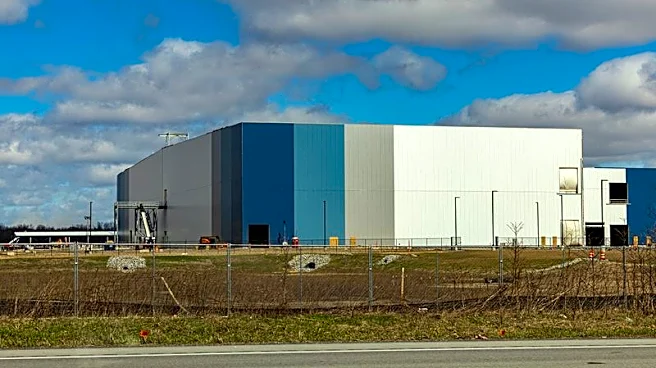
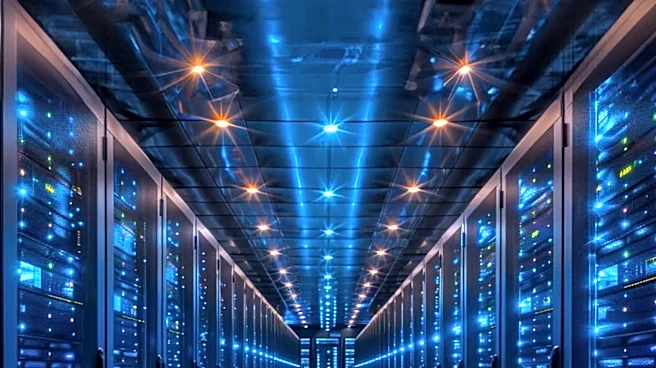
on utility rates. Chapman initiated the study to counter what he described as 'noise' and emotional responses surrounding data centers, seeking to establish a fact-based understanding for policy formulation. The study found that many statistics about water usage in data centers are inaccurate, noting that newer facilities utilize air-cooled, closed-loop systems, a significant departure from older open-loop water systems. Additionally, the study indicated no direct correlation between data centers and increased utility bills for consumers. Chapman highlighted that while grid upgrades might be necessary, their efficiency could eventually lead to lower rates, and data centers could help offset some upgrade costs. The demand for data centers is rapidly growing, with approximately 4,000 already in the U.S.
Why It's Important?
This interim study is important for Oklahoma as it seeks to provide a clearer, fact-based understanding of data centers, which are a growing industry with significant economic implications. By debunking myths about water consumption and utility rate increases, the study aims to foster a more informed public discourse and policy-making environment. Accurate information can prevent emotional reactions from hindering economic development and technological advancement in the state. For industries, a stable and predictable regulatory environment, based on facts rather than speculation, is crucial for investment and expansion. The potential for data centers to offset infrastructure upgrade costs could benefit all utility consumers in the long run, while their presence can attract further tech investment and job creation. Conversely, misinformation could lead to policies that deter such investments, potentially slowing economic growth and technological integration in Oklahoma.
What's Next?
Following the interim study, the insights gathered by Representative Chapman are expected to inform future policy decisions regarding data center development in Oklahoma. The emphasis on accurate information suggests a move towards evidence-based regulation, which could lead to more streamlined processes for data center construction and operation. Communities and the state will likely use these findings to formulate policies that balance economic growth with environmental and public concerns. There may be further discussions on how data centers can contribute to grid upgrades and how to ensure that their presence benefits the broader public through potential rate reductions. The ongoing demand for data centers in the U.S. indicates that Oklahoma will continue to be a target for such developments, making the state's policy framework critical for attracting and managing this growth effectively.
Beyond the Headlines
The study's focus on dispelling myths about data centers touches upon a broader societal challenge: the proliferation of misinformation in public discourse, particularly concerning new technologies and infrastructure projects. By actively seeking to provide accurate data, Representative Chapman's initiative highlights the importance of informed decision-making over emotional responses. This approach could serve as a model for other states grappling with similar issues, emphasizing the need for transparent communication and scientific rigor in policy development. The shift from water-intensive cooling systems to air-cooled, closed-loop systems in newer data centers also underscores the rapid technological advancements aimed at sustainability, which often go unnoticed amidst public concerns. This evolution suggests a future where technological growth can be more environmentally conscious, provided that accurate information about these advancements is effectively communicated to the public and policymakers.