



What's Happening?
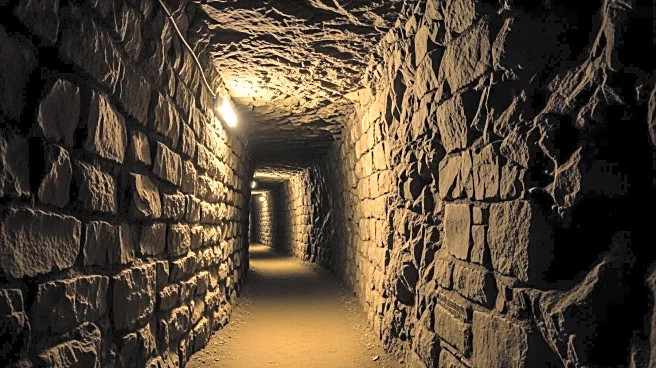
The Israeli Defense Forces (IDF) have revealed a complex tunnel system in Rafah, Gaza, which was used by Hamas. This network, described as being 'like a subway,' extends approximately seven to ten kilometers and includes numerous living quarters and command
posts. The tunnels were notably used to hold the remains of Hadar Goldin, an Israeli soldier. The discovery of these tunnels highlights the ongoing security challenges in the region, as they were used by Hamas to launch attacks against Israel. The IDF's revelation comes amid broader discussions about security and stability in Gaza, particularly in light of recent ceasefire efforts and humanitarian concerns.
Why It's Important?
The exposure of such an extensive tunnel network underscores the persistent security threats faced by Israel from Hamas. These tunnels not only facilitate military operations but also complicate peace efforts in the region. The existence of these tunnels poses significant challenges to any potential stabilization force or peacekeeping efforts in Gaza. For Israel, the tunnels represent a direct threat to national security, necessitating continued military vigilance. For the international community, this development highlights the complexities of achieving lasting peace in the region, as it underscores the need for comprehensive security measures alongside humanitarian aid.
What's Next?
The revelation of the tunnel system is likely to influence future military and diplomatic strategies in the region. Israel may increase its efforts to detect and destroy similar tunnels to prevent future attacks. On the diplomatic front, this development could impact negotiations related to ceasefires and peace agreements, as security concerns remain a top priority for Israel. Additionally, international stakeholders involved in peacekeeping and humanitarian efforts may need to reassess their strategies to address the dual challenges of security and humanitarian needs in Gaza.