








What's Happening?
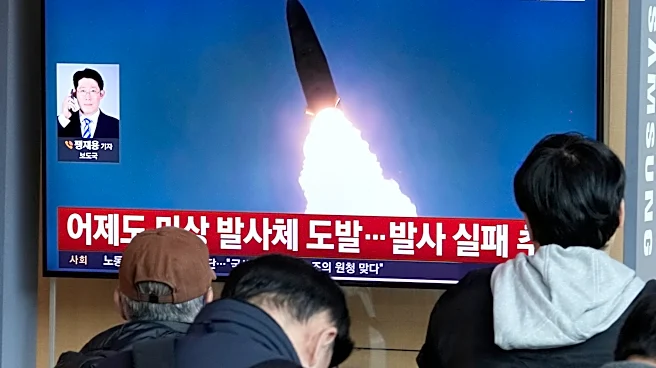
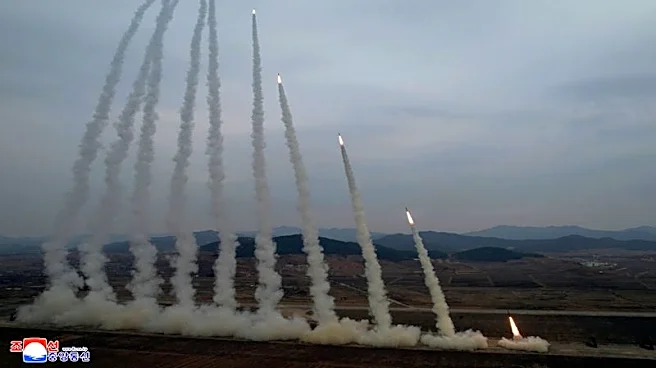
North Korea has announced that its recent weapons tests included ballistic missiles equipped with cluster-bomb warheads. The tests, which spanned three days, were aimed at expanding North Korea's nuclear-capable forces targeting South Korea. According
to North Korean state media, the tests also involved anti-aircraft weapons, electromagnetic systems, and carbon-fiber bombs. South Korea's military detected multiple missile launches from North Korea's eastern coast, with missiles traveling between 240 to 700 kilometers before landing in the sea. The U.S. military stated that these launches posed no immediate threat to the United States or its allies. The tests included the Hwasong-11 ballistic missiles, which are designed for low-altitude, maneuverable flight to evade missile defenses. North Korea claims these missiles can devastate targets over a significant area.
Why It's Important?
The missile tests underscore the ongoing tensions between North and South Korea, complicating efforts for diplomatic engagement. North Korea's advancements in missile technology pose a significant threat to regional stability, particularly for South Korea and Japan. The tests reflect North Korea's strategy to bolster its military capabilities amid stalled diplomatic talks with the United States. The development of nuclear-capable missiles that can evade defense systems increases the risk of military confrontations in the region. Additionally, North Korea's closer ties with Russia and China suggest a strategic alignment against U.S. influence, potentially altering geopolitical dynamics in Asia.
What's Next?
The continuation of missile tests by North Korea is likely to provoke further military readiness and diplomatic responses from South Korea, Japan, and the United States. South Korea's military is analyzing the launches and sharing information with its allies. The presence of Chinese Foreign Minister Wang Yi in North Korea for diplomatic talks may signal further cooperation between the two countries. The international community will closely monitor these developments, as they could impact regional security and diplomatic relations.
Beyond the Headlines
North Korea's missile tests highlight the broader geopolitical strategy among U.S. adversaries to counterbalance American influence. The alignment of North Korea with Russia and China could lead to increased military and technological cooperation among these nations. This development raises ethical and security concerns regarding the proliferation of advanced missile technologies and their potential use in regional conflicts.