








What's Happening?
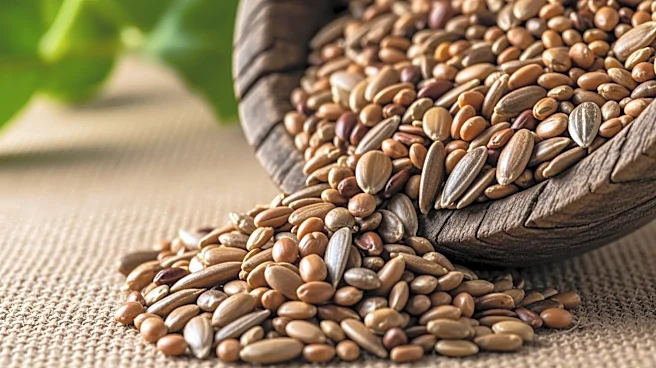
The Federation of Seed Industry of India (FSII) has emphasized the importance of preserving and strengthening India's agricultural biodiversity in response to global supply chain uncertainties and climate variability. The FSII highlights seed diversity and resilient
crop genetics as critical assets for ensuring long-term food security and farmer resilience. Ajai Rana, Chairman of FSII, noted that biodiversity is fundamentally linked to economic resilience and national preparedness. The organization stresses the role of modern breeding technologies, biotechnology, and genome editing in developing climate-resilient crop varieties. Between 2014 and 2025, nearly 3,000 such varieties were developed under national breeding programs. Dr. Paresh Verma, Director General of FSII, emphasized the need to combine traditional biodiversity with modern science to enhance agricultural resilience.
Why It's Important?
The call to strengthen India's agrobiodiversity is significant as it addresses the challenges posed by climate change and geopolitical disruptions on agriculture. By focusing on seed diversity and resilient crop genetics, India can enhance its food security and reduce vulnerability to supply chain shocks. The development of climate-resilient crop varieties is crucial for maintaining productivity under stress conditions, which is vital for the country's economic stability and farmer welfare. Additionally, with supportive policy reforms and increased R&D incentives, India has the potential to become a major global seed hub, increasing its share in global seed exports significantly by 2035.
What's Next?
The FSII advocates for continued support towards seed research, crop improvement, and conservation of indigenous germplasm. The organization calls for policy frameworks that encourage innovation-led and science-based agricultural development. With these measures, India could transform its agrobiodiversity into a strategic and economic advantage, positioning itself as a leader in the global seed market. The focus on strengthening agrobiodiversity is expected to stabilize productivity and enhance resilience against future global uncertainties.