






What's Happening?
The U.S. military is navigating a complex situation following President Trump's declaration of a ceasefire with Iran in April. Despite the ceasefire, the conflict has reached a stalemate, with Iran maintaining a blockade of the Strait of Hormuz and President Trump threatening
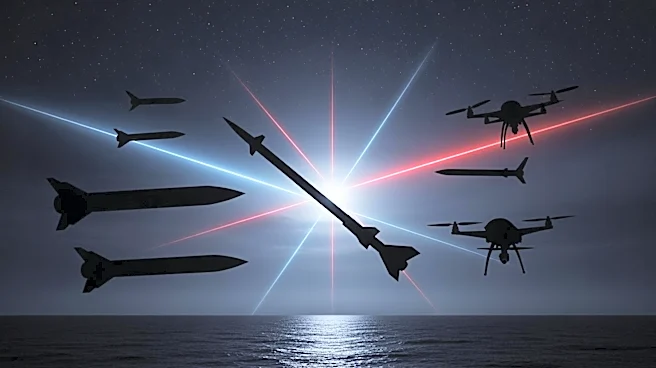
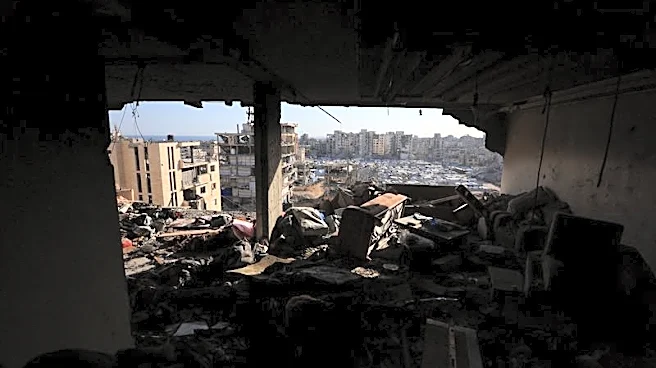
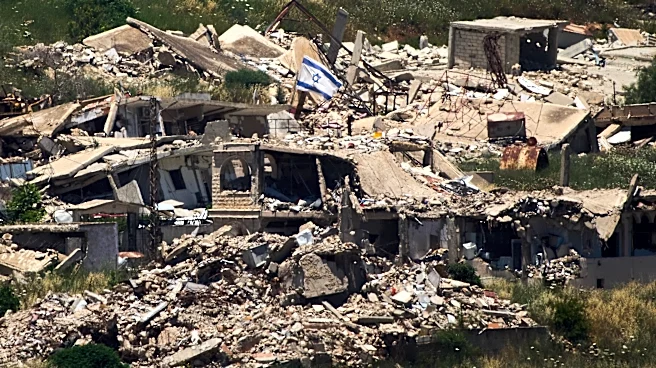
renewed bombings if peace talks fail. U.S. troops in the Middle East are on high alert, maintaining readiness for potential escalations. This involves stocking bases with missiles and interceptors and updating intelligence on potential targets. The situation is stressful for both service members and their families, who face uncertainty and fear due to ongoing hostilities and misinformation from Iranian state media. The Pentagon is also dealing with logistical challenges, such as replenishing depleted munitions and managing the physical and psychological toll on troops, many of whom are recovering from injuries sustained in the conflict.
Why It's Important?
The ongoing conflict with Iran has significant implications for U.S. military operations and the well-being of service members and their families. The stalemate affects global oil markets, as the Strait of Hormuz is a critical passage for oil shipments. The prolonged military engagement strains resources, with the Pentagon facing challenges in maintaining troop readiness and replenishing munitions. The situation also impacts public opinion, with declining support for military actions in Iran. Families of service members experience heightened stress and uncertainty, affecting their mental health and stability. The conflict's continuation could lead to further economic and geopolitical repercussions, influencing U.S. foreign policy and military strategy in the region.
What's Next?
Negotiations between the U.S. and Iran are ongoing, with the potential to extend the ceasefire and address issues like Tehran's nuclear program. However, the stalemate suggests that military readiness and deployments will continue, placing ongoing demands on U.S. troops. The Pentagon will need to address logistical challenges, such as replenishing munitions and supporting injured service members. The situation may also prompt further diplomatic efforts to resolve the conflict and stabilize the region. The outcome of these negotiations will significantly impact U.S. military strategy and foreign policy in the Middle East.