







What's Happening?
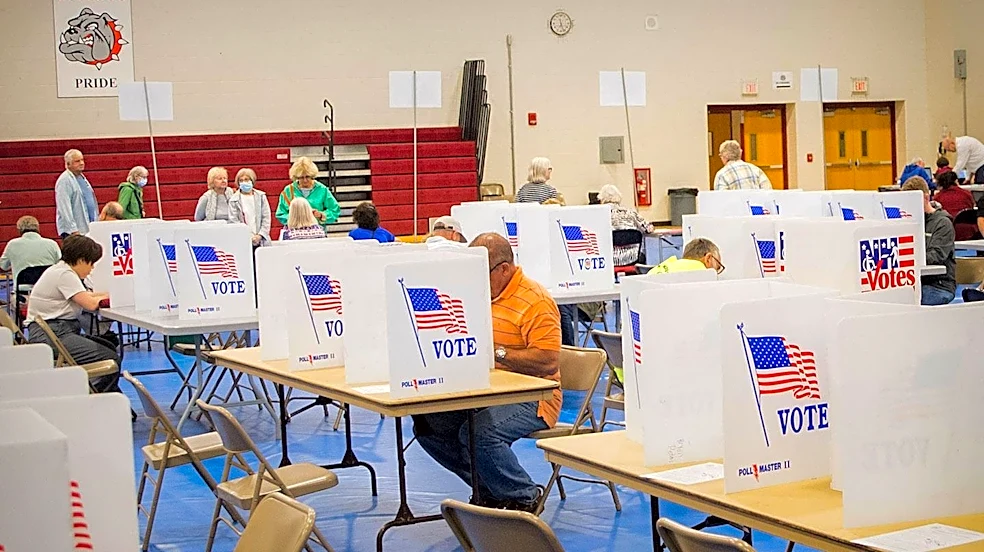
Maricopa County election officials are investigating unauthorized after-hours access to an early voting site at Chandler-Gilbert Community College. On October 16, an election inspector discovered that paper trays on three ballot-on-demand printers appeared
to have been opened overnight. The Maricopa County Recorder's Office (MCRO) stated that no voters were affected by this incident. MCRO procedures dictate that all ballot paper is removed and secured nightly, rendering the trays empty and unusable after hours. Upon notification, the Recorder’s Office immediately dispatched replacement equipment to the site, allowing early voting to continue without interruption. The original devices have been returned for a full forensic examination. The Maricopa County Sheriff's Office and campus security are collaborating on the investigation.
Why It's Important?
This incident is significant as it raises concerns about election security and the integrity of the voting process, particularly in a critical swing state like Arizona. While officials have stated that no voters were affected and ballot paper was secured, any unauthorized access to an early voting site can erode public trust in election systems. The swift response by the MCRO to replace equipment and initiate a forensic examination demonstrates a commitment to transparency and accountability, which are crucial for maintaining voter confidence. The involvement of both the Sheriff's Office and campus security underscores the seriousness with which such breaches are treated, aiming to determine whether this was a human error or a more deliberate attempt to compromise the election infrastructure. The outcome of this investigation could influence future security protocols for early voting sites across the county and potentially the state.
What's Next?
The Maricopa County Sheriff's Office, in conjunction with Chandler-Gilbert Community College's campus security, will continue their investigation into the unauthorized access. The MCRO has indicated that while human error is a possibility, the investigation will definitively determine the cause of the incident. Maricopa County Recorder Justin Heap emphasized the importance of transparency and accountability, assuring the public that findings will be shared promptly. The forensic examination of the original ballot-on-demand printers will be a key step in understanding the extent of the access and whether any data or equipment was compromised. Depending on the findings, there could be adjustments to security protocols for early voting sites, potential disciplinary actions if human error is confirmed, or further legal action if malicious intent is discovered. The results of this investigation will be closely watched by election integrity advocates and the public.
Beyond the Headlines
Beyond the immediate security concerns, this incident highlights the broader challenges in safeguarding democratic processes against both accidental and intentional interference. The reliance on technology in modern elections, while offering efficiency, also introduces new vulnerabilities that require constant vigilance and robust security measures. The public's perception of election integrity is paramount, and even minor incidents can fuel skepticism and distrust, especially in a polarized political climate. This event could prompt a re-evaluation of physical security measures, access controls, and staff training at early voting locations. It also underscores the ongoing tension between ensuring accessible voting and maintaining stringent security, a balance that election officials continuously strive to achieve. The incident serves as a reminder that election security is a multi-faceted issue, encompassing physical, digital, and human elements, all of which must be meticulously managed to uphold the democratic process.