



What's Happening?
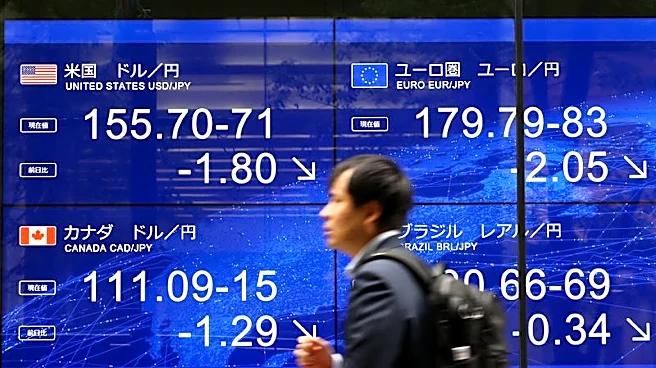
The yen's initial rally following a joint U.S.-Japan intervention has faded, with the currency settling around 158.50 to the dollar. The intervention, aimed at supporting the yen, initially lifted it to 155 from just above 163. However, market attention
is now shifting to domestic policy changes rather than government-backed measures. Robert Sockin, chief U.S. economist at PGIM, expressed skepticism about the intervention's long-term effectiveness, suggesting it may not reverse the yen's weakness trend and could potentially backfire.
Why It's Important?
The yen's performance is crucial for Japan's economy and has broader implications for global markets. Prolonged yen weakness could fuel inflation in Japan, pressure other Asian currencies, and destabilize global markets. The intervention underscores the U.S.'s concern about these potential impacts. The situation highlights the challenges of currency management and the complexities of international economic relations. The focus on domestic policy changes suggests that sustainable solutions may require structural adjustments rather than temporary interventions.
What's Next?
Market participants will likely monitor Japan's domestic policy developments for indications of future currency trends. The potential for the intervention to backfire could lead to increased volatility in currency markets. Speculators may respond by aggressively selling yen and Treasurys, potentially prompting precautionary rate hikes by the BoJ and Fed. The situation requires careful management to avoid unintended consequences and maintain market stability.