







What's Happening?
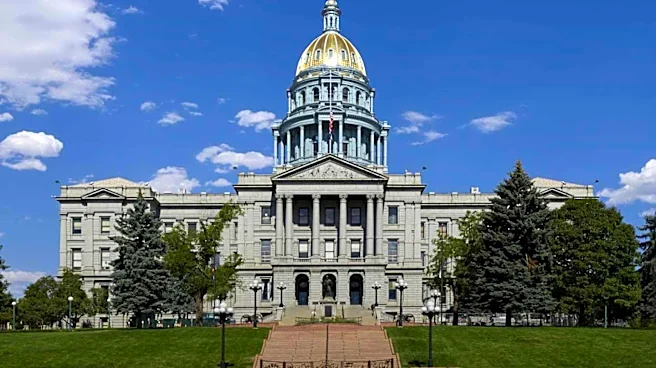
The Colorado Supreme Court has rejected a series of proposed ballot initiatives that aimed to redraw the state's congressional districts, potentially benefiting Democrats in future elections. The court ruled that the initiatives violated the state constitution
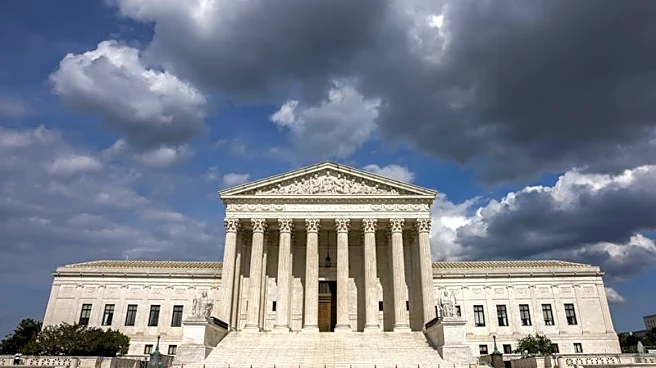
by addressing multiple subjects. These measures sought to bypass the state's independent redistricting commission and establish new U.S. House districts for the 2028 and 2030 elections. This decision is part of a broader national redistricting battle, where Democrats have faced setbacks in states like Virginia and New York. The ruling also comes in the context of the U.S. Supreme Court's recent weakening of federal Voting Rights Act protections, which has allowed Republicans in several Southern states to redraw majority-Black districts.
Why It's Important?
The court's decision is significant as it maintains the current redistricting process established by Colorado's independent commission, which was created to ensure fair representation. This ruling prevents potential gerrymandering that could have favored Democrats, highlighting the ongoing national struggle over redistricting and its implications for congressional control. The decision underscores the importance of independent commissions in maintaining electoral fairness and could influence similar efforts in other states. The outcome affects both political parties' strategies for gaining seats in Congress, with Republicans having already secured advantages in several states through redistricting.
What's Next?
With the court's ruling, Colorado will continue to use the districts drawn by the independent commission until the next census. This decision may prompt further legal and political maneuvers by both parties as they seek to influence future redistricting efforts. Democrats may explore alternative strategies to gain electoral advantages, while Republicans might continue to leverage recent legal changes to redraw districts in their favor. The ruling could also inspire other states to strengthen or establish independent redistricting commissions to prevent partisan gerrymandering.
Beyond the Headlines
The decision highlights the tension between state-level initiatives and constitutional constraints, emphasizing the role of the judiciary in upholding legal standards. It also reflects broader debates about electoral integrity and the balance of power between political parties. The ruling may encourage discussions on the effectiveness of independent commissions and their role in promoting fair representation. Additionally, it raises questions about the impact of recent federal legal changes on state-level redistricting efforts and the potential for increased partisan conflict in future elections.