






What's Happening?
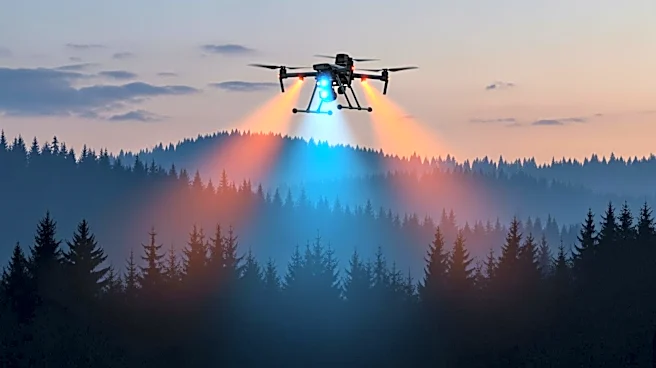
States across the wildfire-prone Western U.S. are increasingly adopting artificial intelligence (AI) technology to improve early wildfire detection. This initiative involves the deployment of AI-enabled cameras in high-risk areas, particularly those that
are sparsely populated or remote, where human detection may be delayed. For instance, Arizona Public Service has installed nearly 40 AI smoke-detection cameras, with plans to expand to 71 by the end of summer. Similarly, Xcel Energy in Colorado has installed 126 cameras and aims to cover seven of the eight states it serves by year-end. The AI systems are designed to detect early signs of wildfires, allowing for quicker response times and potentially preventing fires from spreading. The technology has already proven effective, with AI systems detecting fires faster than traditional 911 calls.
Why It's Important?
The use of AI in wildfire detection is crucial as it addresses the increasing threat of wildfires exacerbated by climate change. By enabling faster detection and response, AI technology can help mitigate the damage caused by wildfires, protecting lives, property, and natural resources. This technological advancement is particularly significant for rural and remote areas where traditional detection methods may be less effective. The integration of AI into wildfire management represents a proactive approach to disaster prevention, potentially reducing the economic and environmental impact of wildfires. Moreover, the success of these AI systems could encourage further investment and innovation in AI applications for environmental sustainability.
What's Next?
As AI technology continues to prove its effectiveness in wildfire detection, it is likely that more states and utility companies will adopt similar systems. The expansion of AI-enabled cameras and the refinement of detection algorithms could further enhance the accuracy and reliability of early warning systems. Additionally, ongoing collaboration between AI developers, government agencies, and utility companies will be essential to optimize the deployment and integration of these technologies. Future developments may also include the use of AI for other environmental monitoring applications, such as air quality assessment and vegetation management, further contributing to environmental protection efforts.