


What's Happening?
The Colorado Water Trust and Eagle River Coalition are organizing a community water panel titled 'Water, Drought, and the Future of Agriculture in the West.' Scheduled for April 14 at Walking Mountains in Avon, the event is part of Climate Action Week.
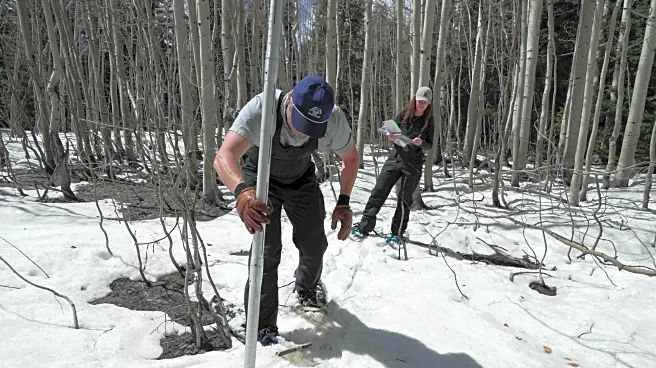
It aims to bring together local experts, ranchers, and water leaders to discuss the effects of changing snowpack, earlier runoff, and ongoing drought on agriculture and water management in Colorado. The panel will address the realities faced by farmers and ranchers in Eagle County, the challenges of water availability, and the importance of agriculture in maintaining river systems. The discussion will also focus on how policy, community action, and collaboration can foster resilient agricultural and water futures. Community members and stakeholders are encouraged to attend.
Why It's Important?
This panel is significant as it addresses the pressing issue of water scarcity in the Western United States, which has profound implications for agriculture, a critical sector in the region. The ongoing drought and changes in snowpack and runoff patterns threaten water availability, impacting crop yields and livestock management. By bringing together experts and stakeholders, the event aims to foster dialogue and collaboration, which are essential for developing sustainable water management practices. The outcomes of this discussion could influence policy decisions and community actions, potentially leading to more resilient agricultural practices and water conservation strategies. This is crucial for ensuring the long-term viability of agriculture in Colorado and similar regions facing water scarcity.
What's Next?
Following the panel, it is expected that the insights and strategies discussed will inform future policy and community initiatives aimed at addressing water scarcity. Stakeholders may pursue collaborative projects to enhance water conservation and management practices. Additionally, the event could lead to increased advocacy for policy changes at local and state levels to support sustainable agriculture and water use. Continued engagement and dialogue among community members, policymakers, and agricultural leaders will be vital in implementing effective solutions to the challenges posed by drought and climate change.