
What's Happening?
Japan's Defense Ministry reported the interception of Chinese military aircraft, including bombers, near its southwestern islands during China's large-scale war games around Taiwan. The incident occurred
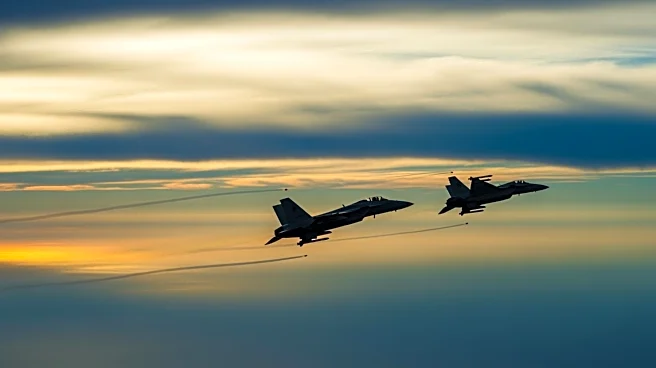
on December 29, coinciding with China's Justice Mission 2025 exercise, which was organized in response to the U.S. approval of significant arms sales to Taiwan. The interception involved eight Chinese aircraft, including bombers and fighter jets, flying from the East China Sea to the Philippine Sea via the Miyako Strait. Japan's Air Self-Defense Force scrambled fighter jets over potential airspace violations. The Chinese formation was described as a simulated long-range air strike package targeting Guam, a key U.S. military outpost in the Pacific.
Why It's Important?
This development underscores the escalating military tensions in East Asia, particularly between China and Japan. The interception highlights Japan's strategic role in the First Island Chain, a U.S. defense strategy aimed at deterring Chinese aggression. The incident reflects China's growing military assertiveness in the region, which could impact U.S. and allied defense strategies. The presence of Chinese bombers carrying missiles in Japan's air defense identification zone signals a potential threat to regional stability and security, prompting concerns among U.S. allies about China's military intentions.
What's Next?
China is expected to continue its military activities along the First Island Chain, maintaining pressure on regional security dynamics. The U.S. may need to bolster its support for allies like Japan and Taiwan to counter China's military maneuvers. Future diplomatic and military engagements between China and its neighbors will be closely watched, as they could influence broader geopolitical strategies in the Asia-Pacific region.