
What's Happening?
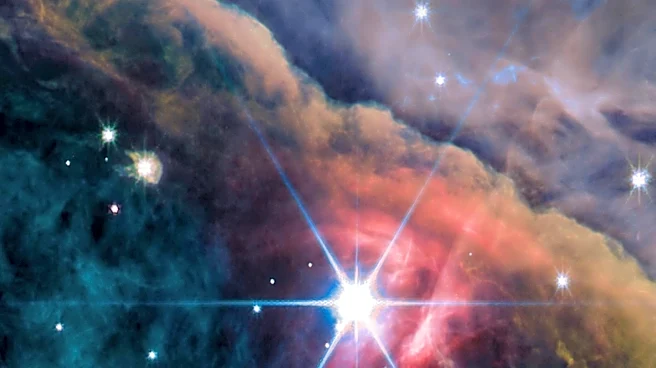
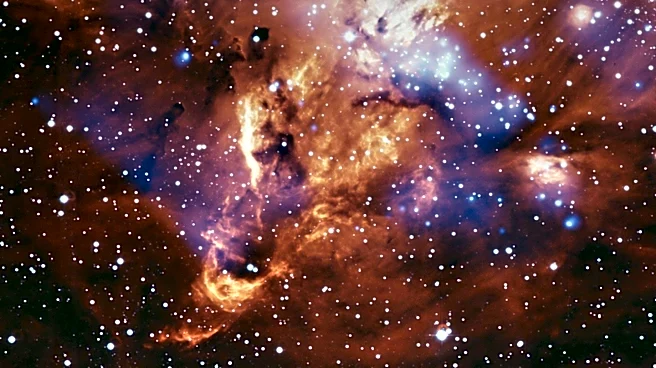
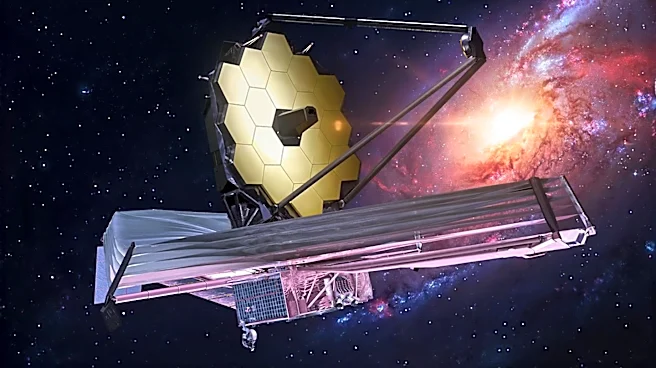
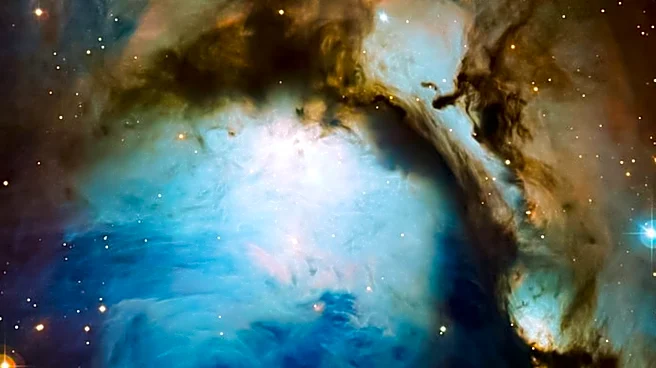
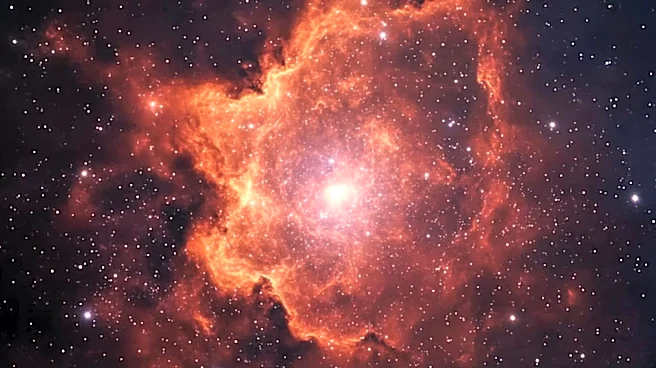
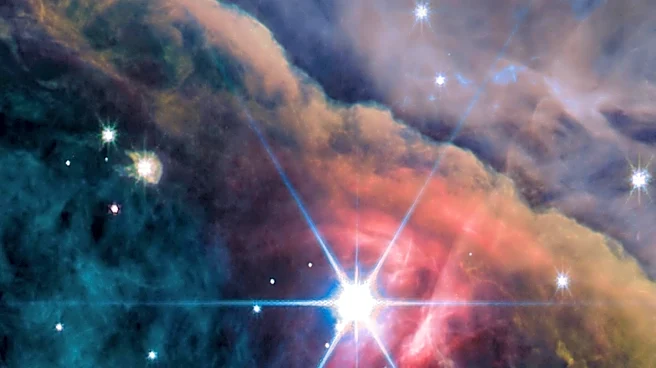
NASA has released a new composite image of the Tarantula Nebula, located in the Large Magellanic Cloud, using data from multiple space telescopes. The image combines X-ray data from the Chandra X-ray Observatory, infrared data from the James Webb Space
Telescope, and optical data from the Hubble Space Telescope. This vibrant depiction reveals new details about the star formation region, showcasing thousands of young stars and complex gas and dust structures. The research, led by Jennifer Rodriguez of The Ohio State University, explores the energy dynamics within the nebula, revealing less X-ray-emitting gas than expected.
Why It's Important?
The study of the Tarantula Nebula provides valuable insights into star formation and the energy processes within nebulae. Understanding these dynamics can enhance knowledge of stellar evolution and the lifecycle of galaxies. The findings challenge existing theories about energy distribution in star-forming regions, prompting further research into the mechanisms at play. This research contributes to the broader field of astrophysics and can inform future space exploration and observation strategies. The collaboration between multiple telescopes and institutions highlights the importance of interdisciplinary efforts in advancing scientific knowledge.