
What's Happening?
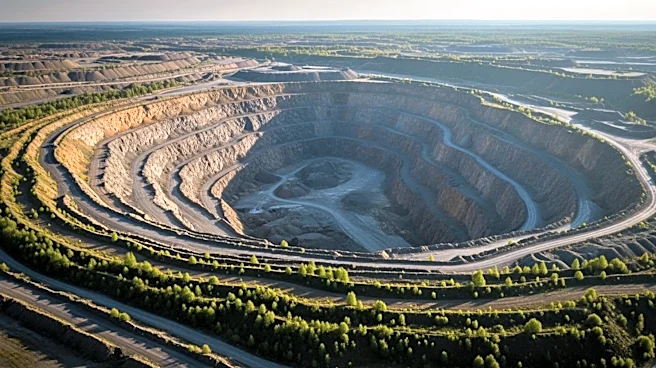
The Bureau of Land Management (BLM) is contemplating the sale of its portion of the Anaconda Copper Mine site in Lyon County, Nevada, to Atlantic Richfield Co. (ARCO). This move could potentially make
the site wholly private, as it would be jointly owned by ARCO and Singatse Peak Services LLC. The mine, which has been undergoing cleanup efforts for years, is nearing the completion of its most polluted sections. However, the prospect of reopening the mine for production has raised concerns among environmental groups and local communities. They fear that the sale could lead to reduced environmental oversight, as future mining operations would only be subject to state, rather than federal, environmental reviews. This has sparked protests and opposition from groups who have monitored the site for years, worried about the potential depletion of local water sources and further pollution.
Why It's Important?
The potential sale of the Anaconda mine site is significant as it highlights the ongoing tension between economic development and environmental protection. If the land is sold to ARCO, the site would no longer be subject to federal environmental reviews, which are typically more stringent than state requirements. This could lead to less oversight and potentially more environmental degradation if mining operations resume. The decision could set a precedent for how similar sites are managed in the future, impacting local communities, water resources, and the broader environmental landscape. The outcome of this sale could influence public policy regarding land management and environmental protection, particularly in areas with a history of pollution.
What's Next?
If the BLM proceeds with the sale, ARCO would likely expedite the cleanup process, but it would also mean that any future mining activities would bypass federal environmental scrutiny. This could lead to increased pressure on state agencies to ensure that environmental standards are maintained. Local communities and environmental groups are expected to continue their advocacy against the sale, potentially seeking legal avenues to challenge the decision. The BLM and ARCO have not yet commented on their future plans for the site, leaving the community in a state of uncertainty. The situation underscores the need for transparent communication and public involvement in decisions that affect environmental and public health.
Beyond the Headlines
The Anaconda mine case reflects broader issues of environmental justice and the challenges of balancing economic interests with the need to protect natural resources. The history of the site, which narrowly avoided a Superfund designation, illustrates the complexities of managing legacy pollution. The potential sale raises ethical questions about the responsibility of corporations and government agencies in safeguarding the environment. It also highlights the importance of public participation in environmental decision-making processes, as local communities often bear the brunt of environmental degradation.