








What's Happening?
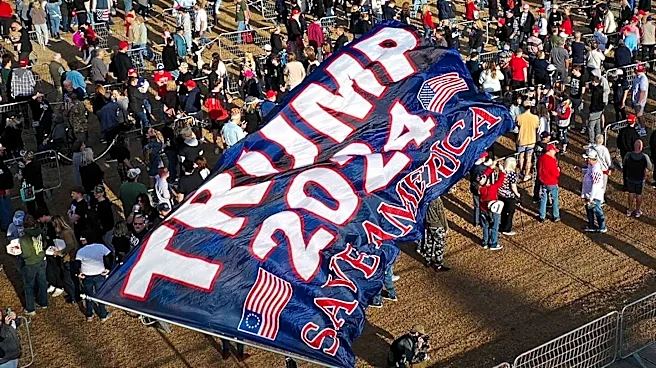
President Donald Trump is urging Republicans to combine voting reforms with a defense spending bill, aiming to pass both measures before Congress adjourns for an extended recess. The proposed legislation, known as the SAVE America Act, has been approved
by the House multiple times but lacks sufficient support in the Senate. Trump has stated he will not sign any other legislation until this measure becomes law. House Speaker Mike Johnson announced plans to attempt passing voting restrictions by attaching them to a defense spending bill through a budgetary process called reconciliation, which requires only a simple majority in the Senate. The bill includes measures such as requiring proof of citizenship to register and a photo ID to vote. However, the proposal faces challenges, including opposition from hardline conservatives and the Senate's 60-vote filibuster threshold.
Why It's Important?
The push for voting reforms tied to defense spending highlights the strategic use of budgetary processes to advance legislative priorities. This move could significantly impact U.S. electoral processes by imposing stricter voting requirements, potentially affecting voter turnout and election outcomes. The strategy also underscores the political maneuvering required to pass contentious legislation in a divided Congress. If successful, it could set a precedent for future legislative tactics, influencing how major policy changes are pursued. The outcome of this effort could affect both the Republican party's legislative agenda and the broader political landscape, particularly in the lead-up to future elections.
What's Next?
If the Senate considers President Trump's demand, lawmakers will have limited time to pass a joint bill before their summer recess. The proposal is likely to face resistance from moderates and fiscal conservatives, complicating its passage. The reconciliation process, while bypassing the filibuster, still requires careful negotiation to secure a simple majority. The outcome will depend on the ability of Republican leaders to unify their caucus and address concerns from various factions. The legislative process will be closely watched by political analysts and stakeholders, as it could influence future legislative strategies and the balance of power in Congress.