



What's Happening?
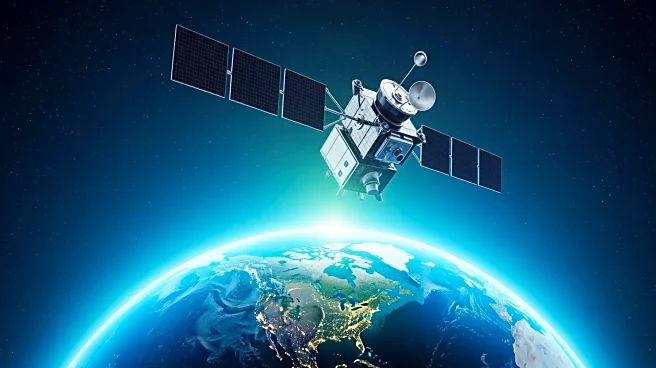
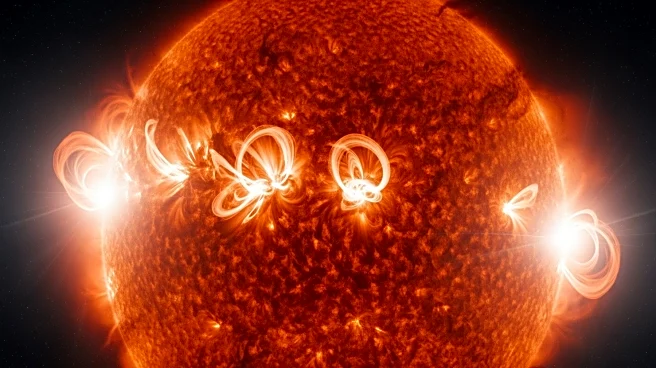
The Sun has emitted a series of powerful solar flares since February 1, causing brief radio communication disruptions in parts of Africa and Europe. The Indian Space Research Organisation (ISRO) has issued warnings about potential blackouts and is closely
monitoring its satellites due to the heightened solar activity. The flares, classified as X-class, are among the most powerful and have the potential to disrupt high-frequency radio communications and navigation signals. These solar events are part of the Sun's active phase in its 11-year cycle, characterized by increased sunspot activity.
Why It's Important?
The solar flares have significant implications for global communication systems and satellite operations. Disruptions in radio communications can affect various sectors, including aviation, maritime, and emergency services, which rely on high-frequency radio signals. The potential for geomagnetic storms, triggered by coronal mass ejections accompanying the flares, poses risks to power grids and could lead to widespread outages, as seen in past events. The heightened solar activity underscores the need for robust monitoring and contingency planning by space agencies and industries dependent on satellite technology.
What's Next?
Space agencies worldwide, including ISRO, are on high alert as more solar flares are expected in the coming days. The active sunspot region responsible for the recent flares continues to evolve, increasing the likelihood of further disruptions. Agencies are prepared to implement contingency plans to mitigate the impact on communication and navigation systems. Continuous monitoring of the Sun's activity will be crucial in anticipating and responding to potential geomagnetic storms and their effects on Earth.