



What's Happening?
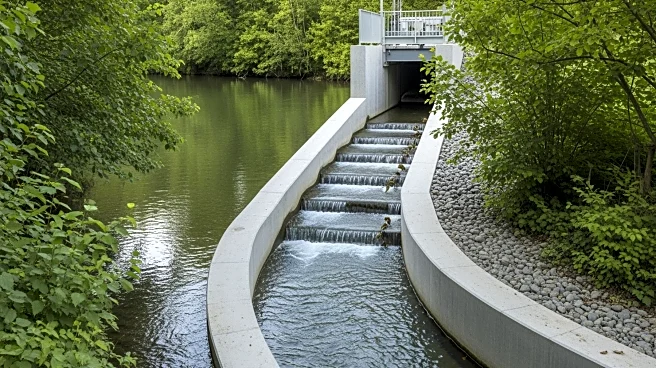
A $1 million federal investment has been allocated to the Confederated Tribes of the Umatilla Indian Reservation and the Oregon Department of Fish and Wildlife to explore fish passage solutions at the McKay Creek Reservoir Dam in Oregon. This funding
will support an alternative analysis to identify feasible options for fish passage, aiming to reconnect over 100 miles of historic salmon and steelhead habitat. The McKay Creek Reservoir Dam, constructed in 1927, has blocked fish passage to upstream habitats for nearly a century. Currently, native migratory fish can only access the lower six miles of the creek. The initiative is crucial for restoring traditional fishing grounds and enhancing ecological benefits, particularly for the Confederated Tribes of the Umatilla Indian Reservation, whose members rely on these resources. Fisheries managers are optimistic about the success of native fish populations once passage is established, as evidenced by recent studies involving radio-tagged hatchery summer steelhead.
Why It's Important?
The project is significant for both ecological and cultural reasons. Restoring fish passage at the McKay Creek Reservoir Dam could revitalize native fish populations, including Chinook salmon, lamprey, and bull trout, which are vital to the ecosystem. For the Confederated Tribes of the Umatilla Indian Reservation, the project holds cultural importance, as it aims to restore traditional fishing practices and provide harvest opportunities for tribal members. The initiative also addresses broader environmental concerns by potentially increasing biodiversity and improving water quality in the Umatilla River Basin. Successful implementation could serve as a model for similar projects across the U.S., highlighting the importance of federal support in ecological restoration efforts.
What's Next?
Following the alternative analysis, the next steps involve securing additional funding to design and construct the chosen fish passage method. The process is expected to take at least a decade, given the complexity of designing a passage for the 165-foot-tall earth-filled dam. Continued collaboration between the Confederated Tribes of the Umatilla Indian Reservation and the Oregon Department of Fish and Wildlife will be crucial in advancing the project. Stakeholders will likely focus on ensuring that the project aligns with both ecological goals and the cultural needs of the tribal community. The success of this initiative could influence future policy decisions regarding dam modifications and fish passage solutions nationwide.