




What's Happening?
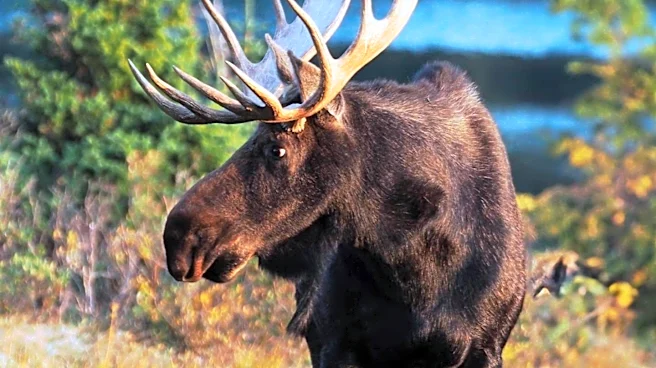
The Wyoming Game and Fish Department (WGFD) has confirmed a case of chronic wasting disease (CWD) in an adult bull moose in the Pilot Hill area, located east of Laramie. This marks only the second time CWD has been detected in a moose within Wyoming,
with the first instance occurring near Bedford in western Wyoming in 2008. The discovery was made after a member of the public reported observing the moose collapse and die on September 2. The WGFD's Wildlife Health Laboratory and the Wyoming State Veterinary Laboratory subsequently confirmed the presence of CWD. Additional diagnostic tests are currently being conducted to gather more information about the animal's overall health prior to its death. CWD is a neurological disease that is always fatal and has previously been identified in deer and elk populations within the same geographic region.
Why It's Important?
The confirmation of CWD in a moose for only the second time in Wyoming's history is significant for wildlife management and public health considerations. CWD is a persistent and fatal disease that can have substantial impacts on cervid populations, including deer, elk, and now, increasingly, moose. Its spread raises concerns about the long-term health and stability of these wildlife populations, which are vital for Wyoming's ecosystems and its hunting economy. The presence of CWD in a new species or in new geographic areas can necessitate changes in hunting regulations, surveillance efforts, and public education campaigns to mitigate its spread. For hunters, this development underscores the importance of testing harvested animals, particularly in affected areas, to prevent potential transmission and to contribute to disease monitoring efforts. The WGFD's ongoing diagnostic tests are crucial for understanding the disease's progression and potential implications for moose populations.
What's Next?
Following the confirmation, the Wyoming Game and Fish Department is encouraging hunters who harvest animals in Moose Hunt Area 45 during the current season to have their animals tested for CWD. The department has provided detailed instructions and information on its website regarding the collection and submission of samples. This proactive measure aims to enhance surveillance and gather more data on the prevalence and distribution of CWD within the moose population. Further research and monitoring will likely continue to assess the extent of the disease's presence in moose and to inform future management strategies. The WGFD will continue to analyze the results of additional diagnostic tests to gain a more comprehensive understanding of the affected moose's health before its death, which could provide insights into the disease's impact on the species.
Beyond the Headlines
The detection of CWD in a moose highlights the ongoing challenge of managing wildlife diseases that can cross species barriers and impact diverse ecosystems. While CWD is not known to be transmissible to humans, its presence in game animals raises questions about food safety and the broader ecological health of affected regions. The long-term implications could include shifts in wildlife population dynamics, changes in predator-prey relationships, and potential economic impacts on industries reliant on healthy wildlife populations, such as hunting and tourism. This event also underscores the critical role of public participation in wildlife management, as the initial report from a citizen led to the discovery. Continued public awareness, responsible hunting practices, and robust scientific research are essential for addressing the complex challenges posed by diseases like CWD.