



What's Happening?
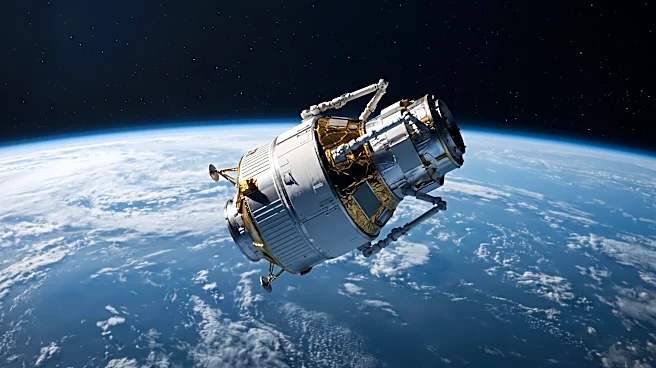
COSMOS 644, a 60 kg Soviet Strela-1M relay satellite launched on April 23, 1974, from Plesetsk, remains in orbit more than 52 years later. This military communications satellite, one of eight Strela-1M spacecraft launched together, circles Earth approximately
12.6 times a day in a 1,336 x 1,490 km corridor. Although it ceased functioning decades ago, its orbit is stable enough for the Space Surveillance Network to track it under NORAD catalog number 7268. The Strela-1M system was the Soviet Union’s first operational store-and-dump tactical communications network, designed to allow ground stations to upload messages during one pass and download them on the next. COSMOS 644 was the fourth satellite in Block 09 of this program. Its operational lifetime was approximately six months, typical for Strela-1M units whose batteries and electronics were not designed for long service. After its mission ended, it became part of the growing population of debris objects in the 1,400 km altitude band.
Why It's Important?
The continued presence of COSMOS 644 in orbit highlights the long-term issue of space debris, a significant concern for current and future space operations. Even non-functional satellites from decades past contribute to the orbital environment, posing potential collision risks to active spacecraft. The stability of its orbit, despite being uncontrolled for over 50 years, underscores how long objects can persist in certain orbital bands. This situation emphasizes the need for responsible space practices, including deorbiting mechanisms for satellites at the end of their operational lives. The existence of such long-lived debris complicates space traffic management and increases the risk of cascading collisions, known as the Kessler syndrome, which could render certain orbital regions unusable. Understanding the behavior of these older objects, like COSMOS 644, provides valuable data for modeling and mitigating future space debris challenges.
What's Next?
COSMOS 644 is expected to remain in its stable orbit for an indefinite period, continuing to be tracked by space surveillance networks. Its long-term orbital stability, influenced by factors like solar radiation pressure and lunisolar perturbations, means it will persist as a piece of space debris. The ongoing monitoring of such objects is crucial for maintaining a comprehensive catalog of space objects and for collision avoidance maneuvers by active satellites. The presence of COSMOS 644 and similar long-lived debris will continue to inform discussions and policy development regarding space sustainability, including international guidelines for satellite design, operation, and end-of-life disposal. Future efforts will likely focus on developing and implementing technologies for active debris removal, as well as stricter regulations for new satellite deployments to prevent the accumulation of more non-functional objects in orbit.
Beyond the Headlines
The story of COSMOS 644 extends beyond its technical details to touch upon the historical legacy of the space race and the unintended consequences of early space exploration. Launched during the Cold War era, this satellite represents a bygone era of military communication technology. Its persistence in orbit serves as a tangible reminder of humanity's enduring impact on the space environment. Ethically, it raises questions about intergenerational responsibility for space, as decisions made decades ago continue to affect current and future space users. Culturally, it symbolizes the rapid advancement of space technology, from rudimentary store-and-dump relays to today's sophisticated global communication networks. The challenge of managing space debris, exemplified by COSMOS 644, underscores the need for a global, collaborative approach to ensure that space remains a sustainable resource for all nations and future generations, balancing innovation with environmental stewardship.