






What's Happening?
A recent feasibility study by MIT physicist Areg Danagoulian proposes a new method to detect hidden nuclear weapons in space, addressing a long-standing challenge in enforcing the 1967 Outer Space Treaty. This treaty prohibits placing nuclear weapons in Earth's
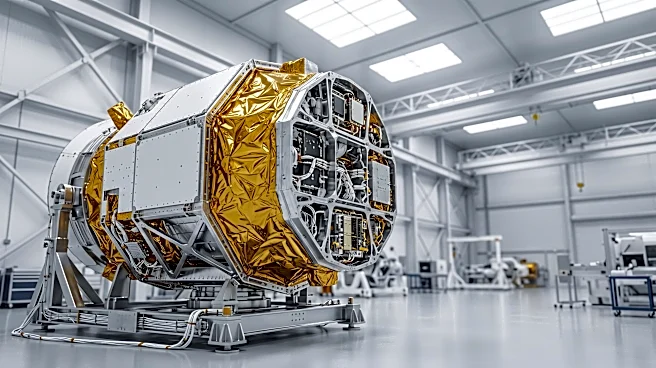
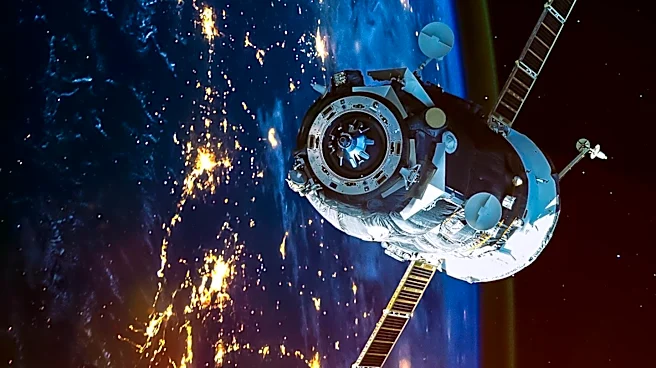
orbit, but a reliable verification mechanism has been absent. The proposed solution involves a satellite-based sensor that would use high-energy protons, trapped by Earth's magnetic field, to probe other spacecraft. The presence of radioactive elements like uranium within a warhead would produce a distinct burst of neutrons, which the detector could identify. This 'encyclopedia-sized' detector could pinpoint a warhead from approximately 2.5 miles (4 kilometers) away after about a week of observation, with faster detection at closer ranges. The development comes amid heightened concerns, particularly after U.S. officials in 2024 indicated that Russia was developing a nuclear anti-satellite weapon, a claim Moscow denies. The alleged spacecraft, Kosmos-2553, launched into a radiation-heavy orbit, raising suspicions due to its erratic movements and Russia's past actions regarding on-orbit objects.
Why It's Important?
The ability to detect nuclear weapons in space is crucial for international security and the stability of critical space infrastructure. A nuclear detonation in orbit could have catastrophic consequences, jeopardizing thousands of commercial, scientific, and military satellites by littering orbit with dangerous debris. The 1962 Starfish Prime nuclear test, which damaged or destroyed eight of the 24 satellites then in orbit and caused widespread disruptions, serves as a historical precedent for the potential devastation. Today, with over 48,000 tracked objects in space, the impact would be far greater, potentially causing direct financial damages approaching $500 billion and a total economic impact topping $3 trillion. Modern satellites, often built with unhardened, off-the-shelf electronics, are particularly vulnerable to radiation from a nuclear blast. This detection method could deter rogue states, such as North Korea, from deploying such weapons, as they might see an advantage in exploiting major powers' reliance on space without having a large satellite fleet of their own to lose.
What's Next?
The implementation of such a detection system faces significant policy challenges despite its technical feasibility. Experts note that getting a satellite close enough to another for inspection, and maintaining that proximity for an extended period, could raise suspicions of spying or attack among satellite operators. Any workable system would likely require the cooperation of the country whose satellite is being inspected, necessitating new international norms and discussions around on-orbit inspections. The policy problems are considered more significant than the technical hurdles. While the proposed sensor offers a solution to a long-standing verification problem, its practical application will depend on diplomatic agreements and the establishment of clear international protocols for space governance. The ongoing development of anti-satellite weapons by nations like Russia underscores the urgency of these discussions and the need for effective deterrents and verification mechanisms in space.
Beyond the Headlines
The proposed nuclear detection technology highlights the evolving nature of warfare and security in the space domain. Beyond the immediate threat of a nuclear detonation, the concept of 'on-orbit inspections' introduces complex ethical and legal questions regarding national sovereignty in space. The Outer Space Treaty, nearly 60 years old, was designed for a different era of space exploration, and its limitations in verification are now starkly apparent with the proliferation of space technology and actors. The potential for a single event to cripple global communications, navigation, weather forecasting, and military systems underscores humanity's increasing dependence on space infrastructure. This development could trigger a broader re-evaluation of international space law and governance, pushing for more robust frameworks for transparency, accountability, and conflict prevention in orbit. The 'solution in search of a problem' argument, suggesting that rational actors would avoid such self-damaging actions, is challenged by the increasing number of state and non-state actors with varying strategic interests and risk tolerances.