





What's Happening?
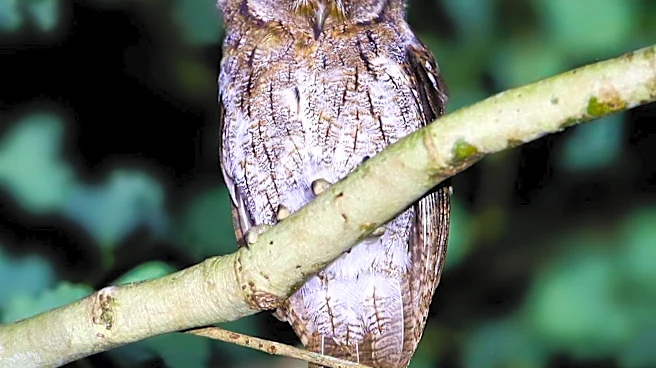
An owl miraculously survived after being struck by a tractor-trailer belonging to Old Dominion Freight Line, Inc. in Carlisle, Pennsylvania, and remaining stuck in the vehicle's air dam for 70 miles at 65 miles per hour. The incident occurred on a Sunday
evening. The driver, unaware the owl was still attached, continued the journey. Upon returning to the trucking terminal, staff, including John from Old Dominion Freight Line, Inc., discovered the owl. The Raven Ridge Wildlife Center was contacted after freight line staff freed the owl, which was unable to fly. Despite the severe impact, the owl sustained no broken wings or legs, and no open wounds, only damage to its left eye. Wildlife officials are now monitoring the great horned owl and plan to release it safely back to its original location once cleared by a veterinarian.
Why It's Important?
This extraordinary survival story highlights the unexpected interactions between wildlife and commercial transportation, a common occurrence across the vast U.S. road network. While seemingly an isolated incident, it underscores the broader issue of wildlife-vehicle collisions, which pose risks to both animals and human drivers, and can lead to significant economic costs in vehicle damage and potential delays for freight companies like Old Dominion Freight Line, Inc. The involvement of freight line staff in rescuing the owl demonstrates a commitment to environmental responsibility and community engagement, which can enhance a company's public image. For wildlife centers, such events emphasize the continuous need for rescue and rehabilitation services, often relying on public and corporate cooperation. The incident also serves as a reminder of the resilience of nature and the unpredictable challenges faced by the trucking industry operating across diverse U.S. landscapes.
What's Next?
The great horned owl is currently under the care and monitoring of the Raven Ridge Wildlife Center. Once the owl is medically cleared by a veterinarian, officials plan to transport it back 70 miles to its original location for a safe release. This incident may prompt increased awareness among trucking companies and drivers about potential wildlife encounters, especially in rural or forested areas. While no specific policy changes are indicated, such events can contribute to ongoing discussions about wildlife corridors, road safety measures, and the role of commercial entities in environmental stewardship. The story's widespread attention could also encourage more public support for wildlife rescue organizations and their efforts to protect local fauna.
Beyond the Headlines
Beyond the immediate rescue, this incident touches upon the complex relationship between human infrastructure and natural ecosystems. The U.S. trucking industry, vital for the nation's economy, operates within diverse environments, leading to inevitable encounters with wildlife. This event, while having a positive outcome for the owl, serves as a poignant reminder of the ecological footprint of transportation networks. It implicitly raises questions about the long-term impact of expanding infrastructure on wildlife habitats and migration patterns. The 'miraculous' survival of the owl could also spark conversations about technological advancements in vehicles, such as sensors or warning systems, that could mitigate wildlife collisions. Ultimately, it underscores the need for continued efforts in conservation and responsible development to minimize adverse interactions between human activity and the natural world.