





What's Happening?
The Minneapolis City Council has passed an ordinance establishing a safe parking program for individuals experiencing homelessness who live in their vehicles. The ordinance, authored by Council Members Jason Chavez, Aisha Chughtai, Aurin Chowdhury, and
Soren Stevenson, allows people to stay overnight in designated, managed off-street parking lots. These sites will operate from 5 p.m. to 8 a.m., with enforced quiet hours, and residents will be required to leave during the day. The program aims to provide a secure place for individuals to sleep, connect with essential services, and receive support. Council Member Chavez emphasized that this 'commonsense policy' has proven effective in other cities, helping people stay safe and access services and housing. The initiative is modeled after a similar program successfully implemented in Duluth, Minnesota, which has shown positive results in transitioning individuals to more permanent housing.
Why It's Important?
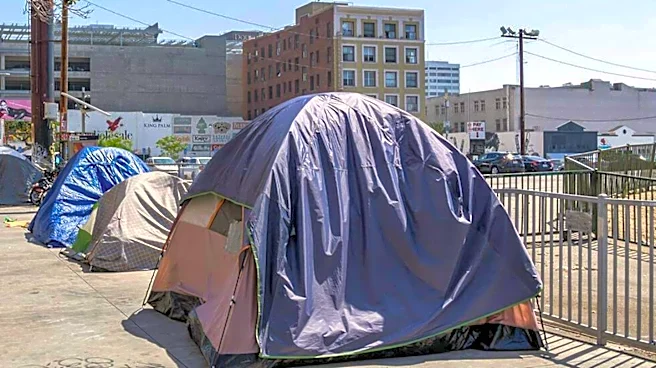
This ordinance represents a significant step in addressing the growing issue of homelessness in Minneapolis, particularly for those living in their vehicles. By providing designated safe parking areas, the city aims to offer stability and dignity to its unhoused population, moving beyond the cycle of individuals constantly searching for new parking spots with limited access to resources. The program's focus on connecting individuals with services and support is crucial for facilitating their transition into permanent housing. This initiative could alleviate some of the public health and safety concerns associated with unsheltered homelessness, benefiting both the unhoused community and the broader city. The success of similar programs in other cities, like Duluth, suggests that this approach can be an effective early intervention strategy, potentially reducing the long-term costs and societal impacts of homelessness.
What's Next?
Following the approval of the ordinance, the next steps will involve identifying and establishing the designated off-street parking lots. These sites will likely be managed by non-profit or religious organizations, as indicated by Councilmember Jason Chavez, ensuring a focus on safety and support for guests. The city will need to develop a robust system for connecting individuals using these sites with social services, housing assistance, and other necessary resources. There may be ongoing discussions regarding the specific locations of these parking areas, as this has been a point of debate in other cities with similar programs. The implementation and effectiveness of this program will be closely monitored, potentially influencing future policy decisions regarding homelessness in Minneapolis and serving as a model for other U.S. cities facing similar challenges.
Beyond the Headlines
The Minneapolis safe parking ordinance highlights a broader shift in how U.S. cities are approaching homelessness, moving towards more compassionate and practical solutions. This policy acknowledges the reality that many unhoused individuals rely on their vehicles for shelter and seeks to integrate them into a system of support rather than criminalizing their circumstances. It underscores the ethical imperative to provide basic human needs, such as safety and stability, while working towards long-term housing solutions. The emphasis on connecting individuals with services reflects a holistic understanding of homelessness, recognizing that it often stems from complex issues requiring comprehensive support. This initiative could foster greater community empathy and understanding towards the unhoused, potentially leading to more collaborative efforts between city government, non-profits, and residents in addressing this persistent social challenge.