



What's Happening?
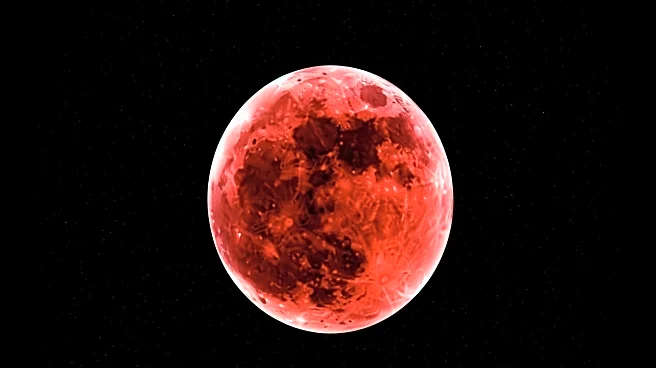
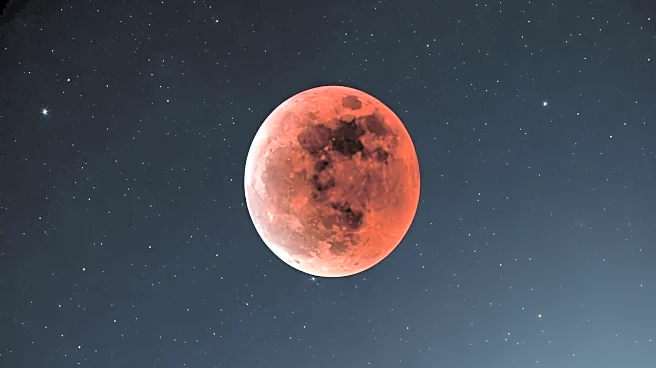
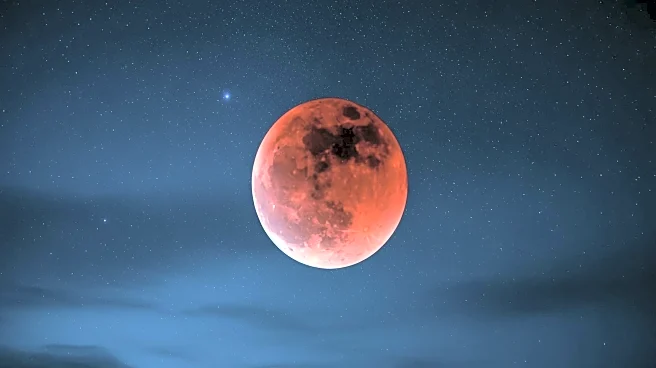
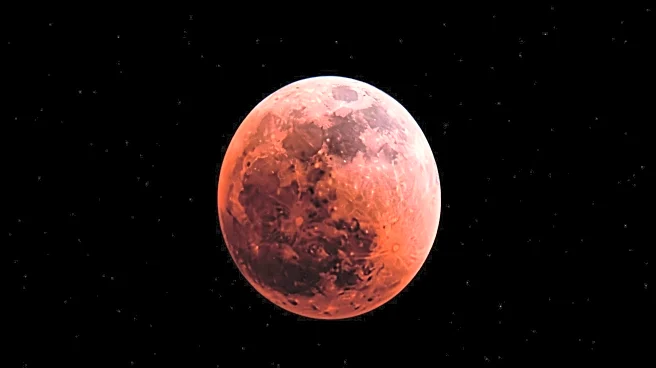
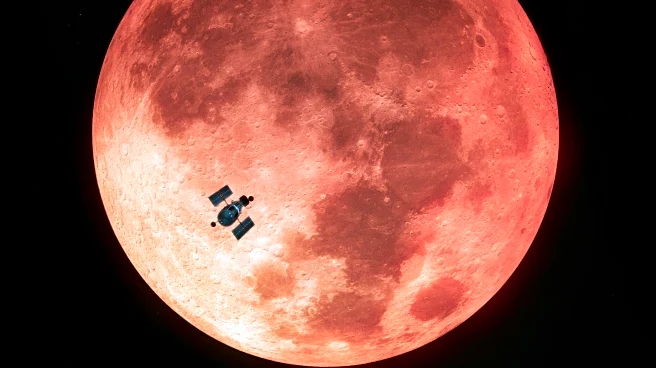
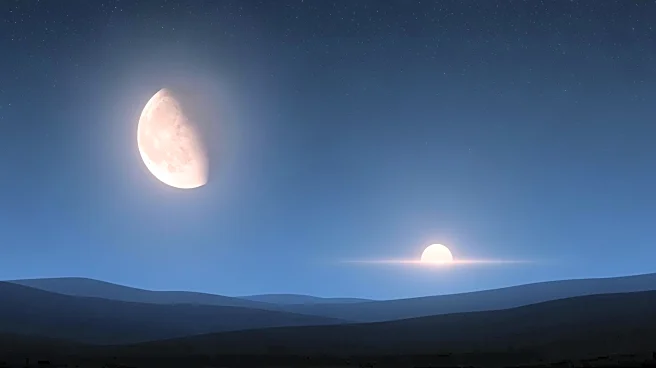
A total lunar eclipse, also known as a 'blood moon', is set to occur on Tuesday morning, visible across the Americas. For 58 minutes, the moon will appear red as it passes through Earth's shadow. This event will also feature a rare selenelion, where both
the sun and the eclipsed moon are visible simultaneously from the East Coast. The phenomenon occurs due to atmospheric refraction, allowing observers to see both celestial bodies despite their alignment. The eclipse provides a unique opportunity for skywatchers to witness a rare astronomical event.
Why It's Important?
Lunar eclipses offer valuable opportunities for scientific observation and public engagement with astronomy. The selenelion, in particular, is a rare occurrence that highlights the complexities of celestial mechanics and atmospheric effects. Such events can inspire interest in space science and encourage educational activities related to astronomy. They also provide a moment for communities to come together and share in the wonder of the natural world. Understanding and appreciating these phenomena can foster a greater appreciation for science and the universe.