

What's Happening?
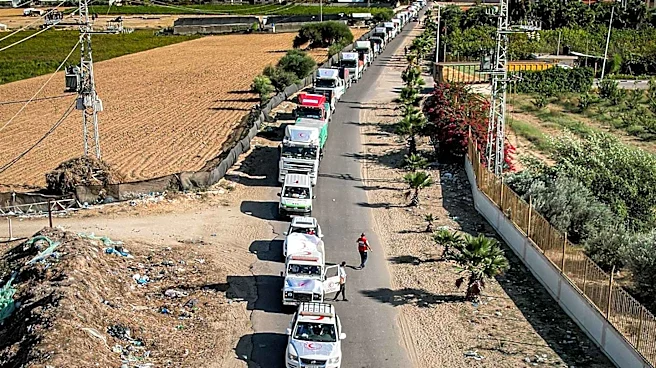
European Commissioner Hadja Lahbib has called on Israel to allow humanitarian aid into Gaza on more days and to establish clear, predictable rules for deliveries. Speaking in Brussels ahead of an EU foreign ministers’ meeting, Lahbib highlighted that
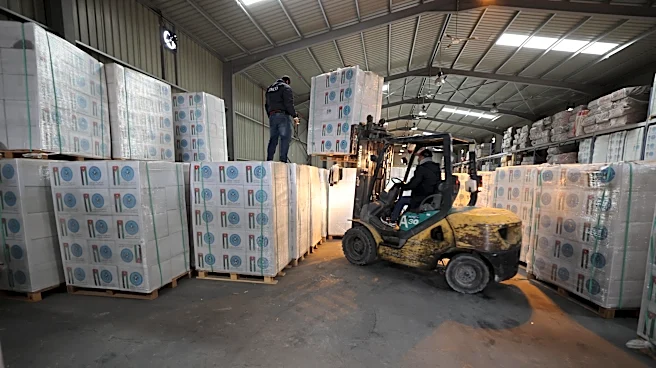
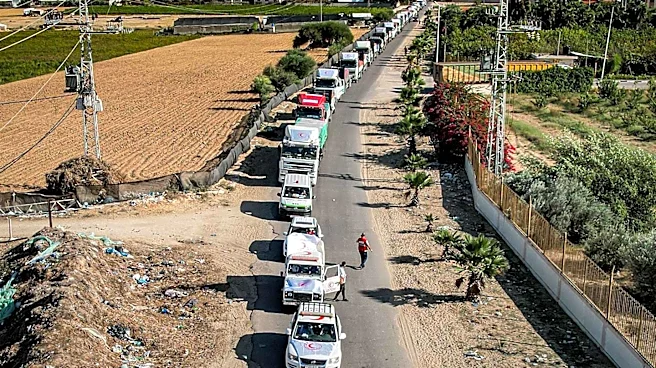
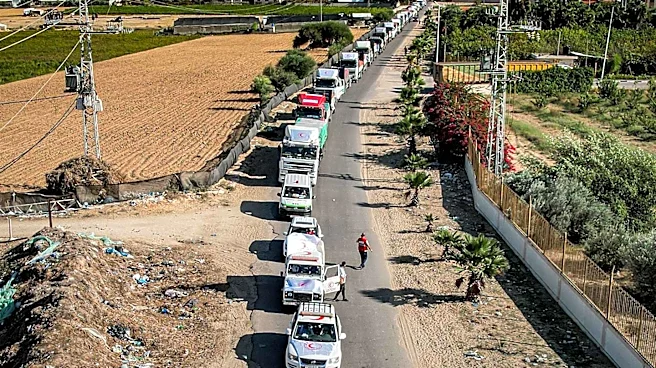
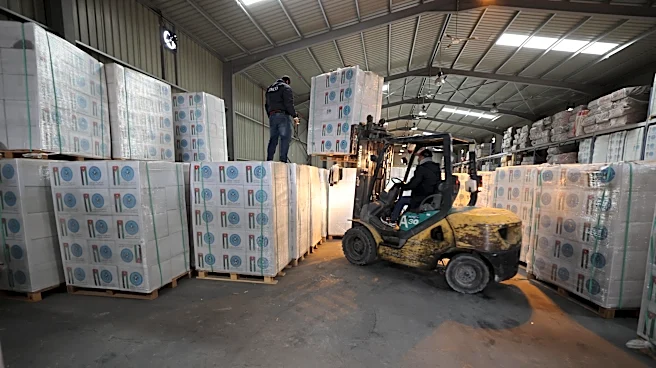
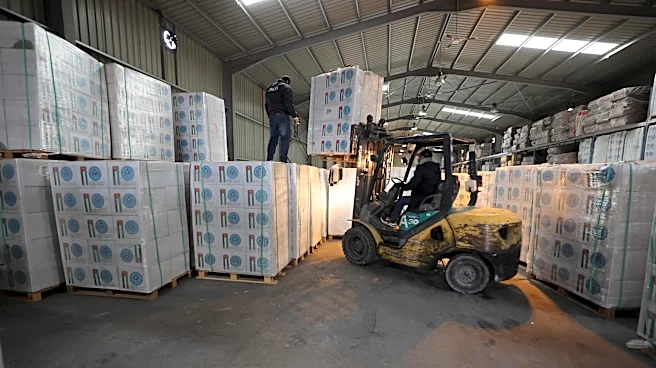
winter conditions are exacerbating the humanitarian crisis in the Palestinian enclave. She noted that 70,000 tents have flooded, families are exposed to freezing rain, and children are dying from hypothermia. Lahbib emphasized the urgent need for more shelter supplies, heavy machinery, engine oil, and spare parts to be permitted into Gaza. She pointed out that critical humanitarian supplies, often classified as dual-use items, are currently allowed into Gaza only once a week. The Commissioner stressed the necessity for more entry days and transparent regulations, stating that even written rules are currently lacking. She also urged Israel to adhere to international humanitarian law.
Why It's Important?
The call from European Commissioner Hadja Lahbib underscores the severe and rapidly deteriorating humanitarian situation in Gaza, which has significant implications for international relations and human rights. The EU's emphasis on predictable aid access and adherence to international humanitarian law reflects growing global concern over the conflict's impact on civilians. The current restrictions on aid, particularly for 'dual-use' items, are hindering relief efforts and contributing to a catastrophic environment where basic necessities are scarce. This situation could further strain diplomatic ties between Israel and its international partners, including the EU, potentially leading to increased pressure and calls for accountability. The humanitarian crisis also poses a long-term challenge for regional stability, as widespread suffering can fuel resentment and instability. The EU's involvement highlights the broader international community's responsibility to address humanitarian crises and uphold international legal frameworks.
What's Next?
The European Union and other international bodies are expected to continue diplomatic efforts to pressure Israel to ease restrictions on humanitarian aid into Gaza. Commissioner Lahbib's statements suggest that the EU will advocate for more consistent and predictable aid access, potentially through formal diplomatic channels and international forums. The ongoing winter conditions will likely intensify the urgency of these calls, as the humanitarian situation is projected to worsen further. Stakeholders, including humanitarian organizations, will continue to document and report on the conditions in Gaza, providing data that could inform future policy decisions and international interventions. The focus will remain on ensuring that essential supplies, including shelter, medical aid, and fuel, can reach the affected population without undue delays or restrictions. The international community will also monitor Israel's response to these calls and its adherence to international humanitarian law.
Beyond the Headlines
The humanitarian crisis in Gaza, as highlighted by Commissioner Lahbib, extends beyond immediate aid needs to deeper ethical and legal considerations. The classification of certain humanitarian supplies as 'dual-use' items, which are then subjected to severe restrictions, raises questions about the balance between security concerns and the imperative to protect civilian lives. This situation could set precedents for future conflicts regarding the interpretation and application of international humanitarian law in besieged territories. Furthermore, the long-term psychological and social impact on the population, particularly children, due to prolonged exposure to harsh conditions and lack of basic services, will be profound. The international community's response to this crisis will also reflect on its commitment to universal human rights and its capacity to enforce humanitarian principles in complex geopolitical environments. The ongoing challenges in Gaza underscore the need for robust international mechanisms to ensure unimpeded humanitarian access during conflicts.