
What's Happening?
The Centers for Disease Control and Prevention (CDC) has released a new analysis indicating that the Ebola outbreak in Central Africa could escalate to 20,000 cases or more if infected individuals are
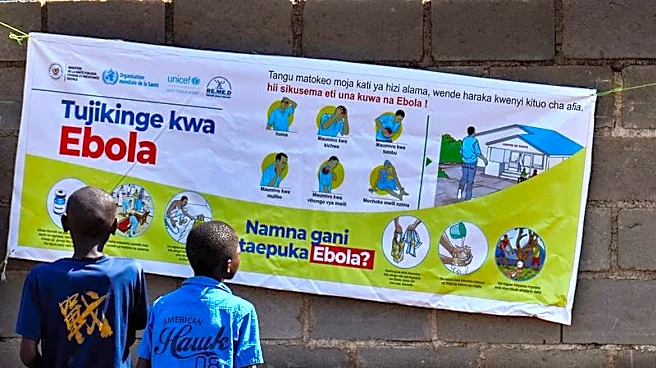
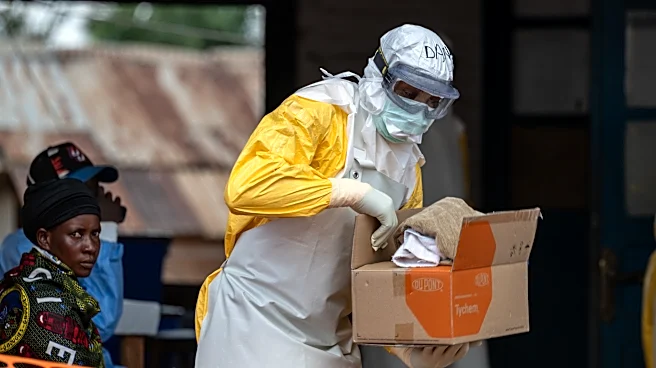
not quickly isolated. This projection is based on computer models that consider various scenarios, with the worst-case scenario potentially mirroring the 2014-2016 West Africa epidemic, which saw over 28,000 cases and more than 11,000 deaths. Dr. Satish Pillai, the incident manager for the CDC’s Ebola response, emphasized the need for strong public health interventions to prevent such an outcome. The outbreak, primarily involving the Bundibugyo virus, has already resulted in about 400 confirmed cases and 63 deaths, according to the Africa Centres for Disease Control and Prevention. The World Health Organization has declared the outbreak a global health emergency.
Why It's Important?
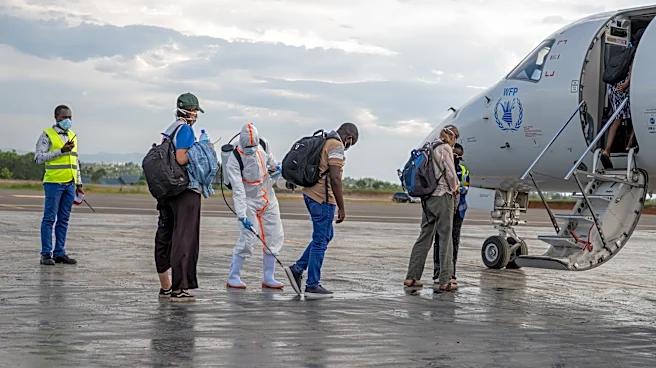
The potential escalation of the Ebola outbreak in Central Africa poses significant public health challenges, not only for the affected regions but also for global health security. The CDC's warning underscores the critical need for effective public health measures to contain the virus and prevent a humanitarian crisis. The outbreak's progression could strain healthcare systems, disrupt communities, and necessitate international aid and intervention. The U.S. has already implemented travel restrictions and health screenings to mitigate the risk of the virus spreading domestically. The situation highlights the importance of global cooperation in addressing infectious disease threats and the need for robust health infrastructure in vulnerable regions.
What's Next?
Efforts to contain the Ebola outbreak will likely involve increased international support and resources to strengthen public health responses in Central Africa. The CDC and other health organizations may continue to monitor the situation closely, adjusting their strategies based on the outbreak's progression. The U.S. and other countries may maintain or enhance travel restrictions and health screenings to prevent the virus from spreading internationally. Additionally, there may be a push for accelerated research and development of treatments and vaccines for the Bundibugyo virus to better manage future outbreaks.