



What's Happening?
As winter progresses, plants are preparing for the arrival of spring by responding to the lengthening days. According to Sharon Yiesla, a plant knowledge specialist at The Morton Arboretum, trees and other plants have developed various strategies to endure
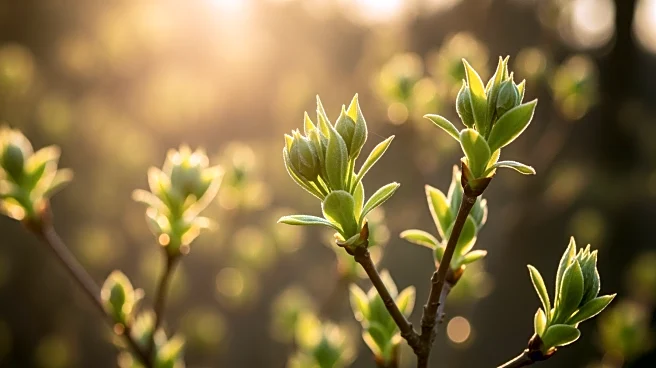
cold winters. While leaves and flowers from the previous year have decayed into the soil, trees and shrubs have already formed buds for new blooms and leaves. Beneath the soil, bulbs like daffodils and tulips contain leaves and flowers ready to emerge when conditions are right. Perennial plants have retreated to their roots to survive the winter, while evergreens continue photosynthesis on warmer days. The lengthening of days and warming soil signal plants to sprout, although unpredictable weather can affect this timing.
Why It's Important?
The preparation of plants for spring is crucial for ecosystems and agriculture. As plants respond to environmental cues, they ensure their survival and contribute to biodiversity. The timing of plant growth affects food production, as crops rely on predictable seasonal changes. However, climate change is causing more volatile weather patterns, which can disrupt these natural processes. Warmer winters may prevent plants from meeting their chilling requirements, impacting their growth and reproduction. Understanding these dynamics helps in planning agricultural activities and conserving native plant species.
What's Next?
As climate change continues to affect weather patterns, plants may face challenges in adapting to new conditions. Researchers and horticulturists will need to monitor plant responses and develop strategies to support their survival. This may include breeding plants with greater resilience to temperature fluctuations or adjusting planting schedules. Public awareness and education on the importance of plant adaptation can also play a role in conservation efforts.
Beyond the Headlines
The cultural significance of plants, particularly evergreens, as symbols of fertility and life during winter highlights their role in human traditions. As climate change alters plant behavior, it may also impact cultural practices tied to seasonal changes. This underscores the interconnectedness of ecological and cultural systems.