






What's Happening?
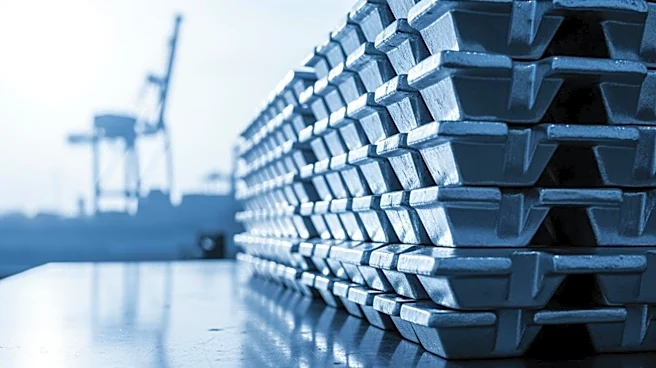
China's aluminum exports experienced a significant increase in May, as reported by official customs data. This surge is attributed to disruptions in shipment and production in the Gulf region due to ongoing conflict in Iran, which has tightened global
supply. China's exports of unwrought aluminum and related products rose by 5.68% in May, reaching 632,000 metric tons. Over the first five months of 2026, these exports increased by 10.4% to 2.69 million tons. The conflict in the Gulf has severely impacted two major aluminum facilities, which account for 8% of the world's output, and has effectively closed the Strait of Hormuz. As a result, primary aluminum output in the Gulf region fell to its lowest in over a decade, with a 35% decrease from the previous year. Despite a global decline in primary aluminum output, China's production rose by 1.5%, reaching 3.68 million tons.
Why It's Important?
The increase in China's aluminum exports highlights the country's growing role in the global aluminum market, especially as other regions face production challenges. The conflict in Iran has disrupted a significant portion of the world's aluminum supply, leading to increased reliance on Chinese exports. This shift could have long-term implications for global trade dynamics and pricing in the aluminum industry. The situation underscores the vulnerability of global supply chains to geopolitical conflicts and the strategic importance of diversifying supply sources. Stakeholders in industries reliant on aluminum, such as automotive and construction, may face increased costs and supply uncertainties.
What's Next?
As the conflict in Iran continues, it is likely that global aluminum supply will remain constrained, potentially leading to further increases in Chinese exports. Industry stakeholders may need to explore alternative supply sources or adjust their production strategies to mitigate risks associated with supply disruptions. Additionally, geopolitical developments in the Gulf region will be closely monitored, as they could further impact global trade and economic stability.