
What's Happening?
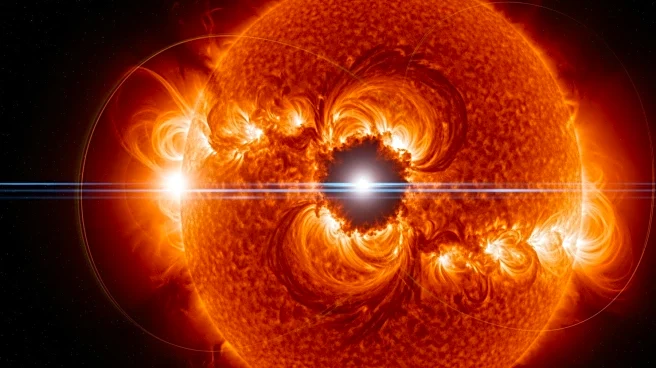
The sun has recently emitted four strong solar flares, classified as X-class, which are the most intense type of flares. These flares, occurring over a span of two days, have the potential to disrupt high-frequency
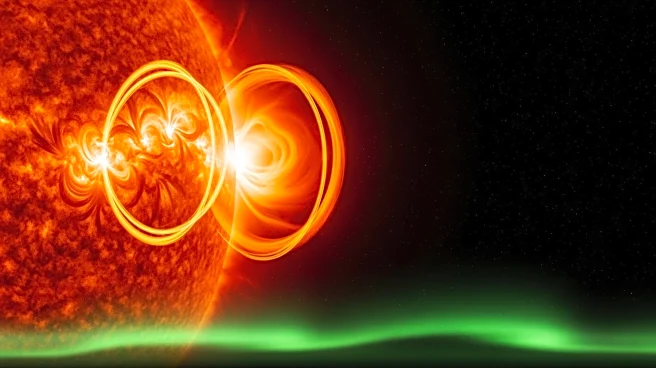
communication bands on the sunlit side of Earth. The National Oceanic and Atmospheric Administration (NOAA) warns that these disruptions could last from minutes to hours. The solar flares are also expected to enhance the visibility of northern lights due to the interaction of solar particles with Earth's atmosphere. This increased solar activity is part of the sun's current solar maximum phase, which is expected to continue through 2026.
Why It's Important?
The occurrence of strong solar flares highlights the ongoing need for monitoring space weather, as these events can have significant impacts on communication systems, navigation, and power grids. The potential disruptions to communication can affect various sectors, including aviation and maritime operations, which rely on high-frequency radio signals. Additionally, the enhanced northern lights offer a unique opportunity for scientific study and public engagement with natural phenomena. Understanding solar activity is crucial for preparing and mitigating the effects of space weather on modern technology and infrastructure.