

What's Happening?
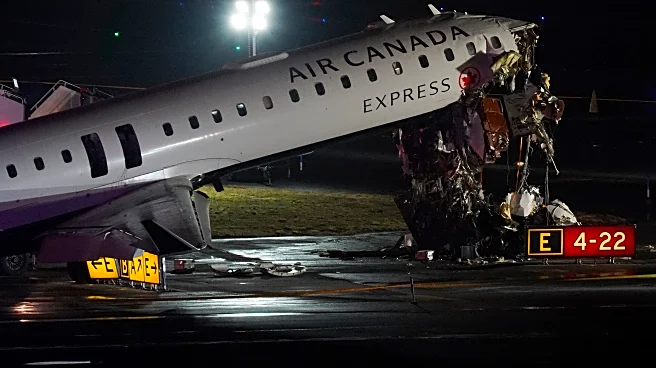
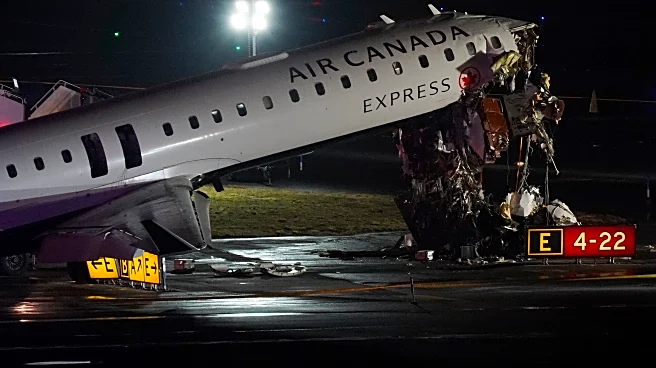
An Air Canada Express jet collided with a fire truck while landing at New York's LaGuardia airport, resulting in the deaths of both pilots and injuries to dozens of passengers and crew members. The incident occurred late on Sunday and led to the temporary
closure of the airport. The collision happened as the fire truck was responding to a separate emergency involving a United Airlines aircraft. The U.S. National Transportation Safety Board (NTSB) has dispatched a team to investigate the incident, and the Federal Aviation Administration (FAA) has announced that the airport will remain closed until 2 p.m. ET on Monday. The closure has caused significant travel disruptions, with over 500 flights canceled.
Why It's Important?
The collision at LaGuardia Airport highlights ongoing concerns about aviation safety and the management of emergency responses on runways. The incident adds to a series of recent aviation lapses, raising questions about the effectiveness of current safety protocols. The closure of LaGuardia, one of New York's busiest airports, exacerbates travel disruptions already impacted by a partial government shutdown. This event underscores the need for improved coordination between air traffic control and ground emergency services to prevent similar tragedies in the future.
What's Next?
The NTSB's investigation will likely focus on the communication and procedural breakdowns that led to the collision. The findings could prompt changes in how emergency vehicles are managed on active runways. Additionally, the incident may influence legislative efforts to enhance aviation safety standards. Stakeholders, including airlines and airport authorities, will be closely monitoring the investigation's outcomes to implement necessary safety improvements.