






What's Happening?
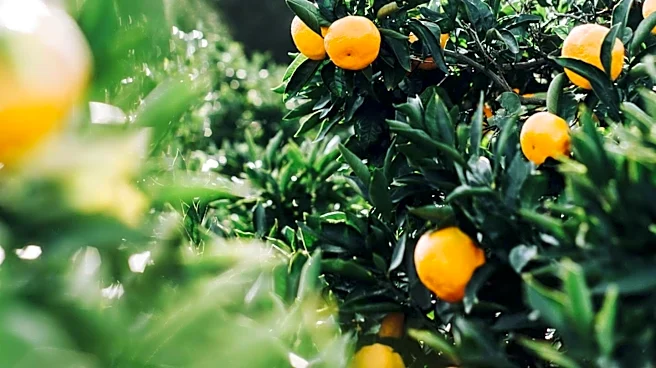
Florida citrus growers are now planting new trees modified with gene-editing technology to protect against the devastating citrus greening disease. This bacterial infection, spread by the Asian citrus psyllid, attacks the trees' immune systems, leading
to bitter, discolored fruit and eventual death. The disease arrived in Florida in 2005 and has caused a massive decline in citrus production, with shipments dropping from approximately 300 million boxes annually in the late 1990s to just over 15 million boxes in the most recent season. Soilcea, a Tampa-based company, developed a gene-edited rootstock called CarriCea T1 using CRISPR technology. This rootstock is designed to maintain the tree's immune function, reducing the reliance on insecticides. The Environmental Protection Agency approved these genetic modifications earlier this year, and growers are now awaiting the long-term results of these plantings.
Why It's Important?
The adoption of gene-edited citrus trees represents a critical effort to save Florida's struggling citrus industry. The citrus greening disease has already forced many long-standing family businesses to close, highlighting the severe economic impact on the state's agricultural sector. If successful, this gene-editing technology could provide a sustainable solution to a problem that has eluded conventional treatments like sprays and protective tents. The ability of CarriCea T1 to bolster the trees' natural defenses could significantly reduce the need for chemical interventions, potentially leading to more environmentally friendly farming practices and lower operational costs for growers. This development could also set a precedent for using gene-editing in other agricultural sectors facing similar biological threats, offering a new pathway for crop resilience and food security.
What's Next?
The immediate next step involves monitoring the performance of the newly planted gene-edited trees. While initial test field results show promising signs, with CarriCea T1 rootstock trees appearing taller and greener, the true test will be the quality and quantity of the fruit produced, which can take several years to manifest. Soilcea CEO Yianni Lagos emphasizes that while data suggests success, a definitive understanding of the trees' long-term performance will require observation over approximately a decade. The industry will be closely watching for how these trees perform across various growing conditions and how the fruit tastes, as consumer acceptance will be crucial for widespread adoption. Regulatory bodies and the scientific community will also be evaluating the long-term ecological impacts and efficacy of this gene-editing approach.
Beyond the Headlines
This initiative delves into the broader implications of genetic engineering in agriculture, particularly the ethical and regulatory considerations surrounding genetically modified organisms (GMOs) versus gene-edited crops. The distinction, in this case, is that gene-editing modifies existing genes rather than introducing foreign DNA, which can influence public perception and regulatory pathways. If successful, this could shift the paradigm for how agricultural challenges are addressed, moving towards more precise genetic solutions. It also highlights the ongoing battle between agricultural innovation and natural threats, underscoring the vulnerability of monoculture farming to diseases. The long-term success of CarriCea T1 could pave the way for similar biotechnological interventions in other crops, potentially transforming global food production systems and reducing reliance on traditional pest and disease management methods.